
TOPIC
10
Sentiment and Behavioural Exploration of Social Media Users on Radio Frequency Electromagnetic Fields (RF-EMF) Emission-related Content
LEAD RESEARCHER
Dr. Rohana Mijan
UNIVERSITI UTARA MALAYSIA
TEAM MEMBERS
Dr. Norazlin binti Ab Aziz
UNIVERSITI MALAYA
Ms. Siti Syamsul Nurin binti Mohmad Yazam
UNIVERSITI UTARA MALAYSIA
Abstract
The widespread use of wireless technology has intensified public concerns about the health effects of Radio Frequency Electromagnetic Fields (RF-EMF). These concerns span personal exposure, debates over 5G, and Wi-Fi radiation. Social media amplifies these discussions, making it essential to understand user sentiment and behaviours surrounding RF-EMF emissions to inform targeted communication strategies. This research explores social media discussions on RF-EMF, focusing on public concerns, behaviours, and sentiment using Selective Exposure Theory. Data were collected from X, Facebook, Instagram and TikTok posts and comments from February 2024 to July 2024 by analysing text, images, videos, and hybrid content. A mixed-methods approach combined social media content analysis with the Chi-Square test, Likelihood ratio and Spearman's correlation analyses to identify significant associations between variables. Findings indicate that X dominates RF-EMF emissions discourse, engaging by public advocates and entrepreneurs, while Facebook attracts entrepreneurs and NGOs. Instagram and TikTok serve niche audiences with limited influence. Multimedia formats, especially text combined with images, are most engaging, reflecting a preference for clarity and visual appeal. Content preferences are driven by personal and professional interests, health concerns, and technological interests. While engagement behaviours differ significantly across user types. Negative sentiment dominance among users compared to positive. The risk communication strategies proposed are tailored to the user tendencies, including the objective to engage, message contents, framing and practical tactics. Recommendations emphasise leveraging X and Facebook or specific platforms and influencers for outreach, prioritising multimedia content, and addressing misinformation proactively. This research contributes to theoretical understanding while offering actionable insights for creating audience-specific messaging strategies.
Keywords: Social Media, Sentiment Analysis, RF-EMF
Introduction
RF-EMF emissions have become a subject of considerable concern and debate in recent years due to their pervasive presence in modern society. RF-EMF emissions are ubiquitous in our daily lives, from mobile phones to Wi-Fi routers and cell towers. However, the associated risks and implications of RF-EMF emissions remain a complex and multifaceted issue that warrants exploration from various angles. One (1) significant aspect of the RF-EMF emissions debate revolves around public concerns and misconceptions regarding its potential health effects. Some studies have indicated the possibilities of non-thermal effects in living organisms, but these have never been substantiated. For example, a World Health Organization (WHO) Q&A on 5G mobile networks and health says that the overall exposure remains below international guidelines, and no consequences for public health are anticipated (ITU/EMF 5G, 2021). There is less scientific reason to use different exposure limits in different countries.
Despite the lack of conclusive evidence, there is widespread misinformation and apprehension surrounding RF-EMF emissions from the tension between policymaking and pressure from public concern in this field (Mazar & Ball, 2021), including on social media platforms. The misinformation around 5G has exacerbated this trend and is fuelled by social media users (Mazar & Ball, 2021). The persistent concerns lingered regarding the potential health impacts of RF-EMF, including fears of increased cancer risk, reproductive issues, and neurological disorders. By exploring the sentiments and behaviours of social media users towards RF-EMF emissions content provides valuable insights into the prevalence of misconceptions and the factors influencing public perception. Understanding how these health concerns are perceived, shared, and discussed among different user groups on social media platforms can offer valuable insights into risk perception and communication dynamics in the digital age (Rodríguez-Ibáñez et al., 2023; Singh et al., 2019).
Therefore this research aims to explore sentiment and behavioural social media users in terms of behavioural patterns and responses to social media content in relation to RF-EMF emissions. The specific objectives are:
RO1: To identify and list the types of RF-EMF content available on social media platforms and the users' content preferences;
%20--%3e%3csvg%20version='1.1'%20id='Layer_1'%20xmlns='http://www.w3.org/2000/svg'%20xmlns:xlink='http://www.w3.org/1999/xlink'%20x='0px'%20y='0px'%20viewBox='0%200%2019%2019'%20style='enable-background:new%200%200%2019%2019;'%20xml:space='preserve'%3e%3cstyle%20type='text/css'%3e%20.st0{fill:%232DC1D6;}%20.st1{fill:%23FFFFFF;}%20%3c/style%3e%3cg%3e%3cg%3e%3cpath%20class='st0'%20d='M9.5,19C4.3,19,0,14.7,0,9.5S4.3,0,9.5,0S19,4.3,19,9.5S14.7,19,9.5,19'/%3e%3c/g%3e%3cpolygon%20class='st1'%20points='4.9,5.7%205.8,5.3%209.5,12.6%2013.2,5.3%2014.1,5.7%2010,13.7%209,13.7%20'/%3e%3c/g%3e%3c/svg%3e)
RO2: To analyse the trend of current and potential responses to each content type and preference (including types of discussion, information sources, information formats and other identified variables);
RO3: To identify the correlations between types of contents, preferences, behaviour, sentiments and perceptions;
RO4: To recommend in detail communications approaches and strategies for instilling/increasing awareness at targeted demographics such as environmentalists, NGOs, experts, academicians, anonymous and identified users.
Guided by the theoretical framework of Selective Exposure Theory, this literature review highlights the complexities of social media users' engagement with RF-EMF-related content. It examines the interplay of content types, user preferences, response trends, and communication strategies to provide insights into their sentiments and behaviours. Mixed-method applied to seek a deeper understanding of the multifaceted challenges surrounding RF-EMF emissions and inform effective risk communication strategies. It is essential for gaining a comprehensive understanding of public sentiment, behaviour, and societal responses to these debate issues. By addressing these concerns, this research could contribute to informed decision-making and public discourse surrounding RF-EMF emissions and its implications for society. To this end, we review the relevant literature followed by a discussion of the methodology, methods of analysis and presentation of our results, after which we undertake to discuss the meaning of these results. We conclude by giving insights on the recommendation of this study and conclusion.
Literature Review
THE ROLE OF SOCIAL MEDIA
Social media refers to interactive computer-mediated technologies that allow the sharing of information, ideas, and other forms of expression through virtual communities and networks (Titanji et al., 2022). It rapidly expanding set of technology tools that people use to communicate, learn, interact, document, create, and participate in societies worldwide (Caplan & Purser, 2019). It provides opportunities for individuals to connect and share with others across various settings, including country of origin, profession, race/ethnicity, sexual orientation, and gender identity (Lin, Sarker & Featherman, 2019, Smith & Milnes, 2016). Social media platforms vary widely in their content types and engagement dynamics. Social media platforms like X (formerly known as Twitter) thrive on concise, informative posts, including disaster updates, trending topics, and public discourse, leveraging retweets and replies for engagement (Walker & Burns, 2019; Suarez & Clarke, 2022). Facebook supports a variety of content posts including text, images, video, live streaming, and messaging, with different metrics for measuring engagement such as likes, shares, and comments (Scott & Jacka, 2012). Instagram excels more with educational images, catchphrases, and product reviews, with catchphrase images performing particularly well in driving likes and views (Lotto et al., 2022; Gao et al., 2021). Whereas TikTok focuses on engaging younger audiences with educational and motivational videos on health, fitness, and activism, with interactive formats like lip-syncing and duets gaining traction during social movements (Cervi & Divon, 2023; Milton et al., 2023).
These content types shaped user engagement across platforms, highlighting the importance of strategically combining these appeals to align with platform strengths and user preferences to maximise audience engagement, especially in discussing crucial issues such as RF-EMF.
The Discussion of RF-EMF Emissions in Social Media
Radiofrequency electromagnetic fields (RF-EMF) refer to the electromagnetic radiation emitted by wireless communication devices such as mobile phones and base stations. RF-EMF emissions have become a topic of concern due to their potential health effects on living organisms (Abdulmajeed, 2023) to brain development (Tran et al, 2023) and proposed solution to develop a model to forecast RF-EMF emissions values (Chen et al, 2021) even though not fully understood. Besides the ongoing research, users state their assumptions and solutions on the issues of RF-EMF emissions, especially in social media such as concern about the prolonged use of mobile phones and WI-FI in school even though comply with international safety standards (Berglez & Olausson, 2021), outdoor radio communications systems and sources used inside electric vehicles (Hamiti, 2022), highlight the importance of understanding exposure levels and risk perception for developing informed risk communication strategies (Karipidis et al, 2021). Users are also concerned about the potential effects of 5G and other telecommunication sources on natural terrestrial and aquatic environments, including migratory patterns and pollination (Zeleke et al., 2021) and the physiological and health-related effects of radiofrequency electromagnetic fields on children and adolescents (Bodewein et al., 2022). It is found that the discussion on personal exposure to RF-EMF emissions from wireless communication systems focuses on indoor effects (Debnath et al., 2022). This proliferation of devices emitting RF radiation, including Wi-Fi routers and cell phones, has generated controversy, although scientific evidence has not pointed to the existence of risk (Gryz, Karpowicz, & Zradziński, 2022).
The discussion creates trends in social media such as user content preferences that formed behaviour such as active or passive in representing the reactions. For example, the 'like' reaction, is followed by positive reactions (love, haha, wow), and the least likely to use negative reactions (sad, angry) (Scott, Conlon, & Wilson, 2020; Dolan et al., 2019). The accumulated behaviours called sentiment incorporate multiple modalities (text, audio, video) to provide an accurate understanding of public sentiment of RF-EMF emissions issues. The topics like government, society, environment, health, and economics show strong correlations with various emotions (Fonseca, et al., 2023) and more reliably by cross-verifying the sentiment across different types of content (Rao et al., 2021). The debate on RF-EMF emissions raised the proposed communication strategies by scholars to align with the context, such as emphasising the coordination of information between the public, compelling dialogue and debate (Shakil Hameed, 2020; WHO, 2019; Sandman, 2012), taking specific actions based on misinformation, and assign a task force to navigate the complexity of digitalisation, which needs to be implemented on time (Lisa, 2018), law enforcement if necessary (Abdullah, 2021) using the media to spread the relevance information (Sanussi & Siarap, 2014) and strengthening trust (Fernandez et al., 2019). WHO South-East Asia Region: 2019–2023 advises governments to establish risk communication units, ensure coordinated messaging through mapped stakeholders and SOPs, and strengthen public communication using media and social media with trained spokespeople. It also highlights the integration of community perceptions through health worker networks and calls for robust systems to monitor and counter misinformation, such as hotlines and media analysis, to maintain public trust during emergencies.
Despite these strategies, other scholars also mention the contextualisation of the strategy related to the public because their understanding is based on their own experiences (Fernandez et al., 2019). This study used the Selective Exposure Theory which involves the process of individuals preferentially seeking out and engaging with information that aligns with their pre-existing beliefs and attitudes (Sears & Freedman, 1967). Selective Exposure Theory encompasses a complex interplay of content types, user preferences, response trends, correlations between content and individual dispositions, and communication strategies.
Methodology
This research adopts a sequential research approach, beginning with qualitative methods followed by quantitative methods (Johnson & Onwuegbuzie, 2004). In this design, qualitative data is prioritised and collected first, while quantitative data serves to complement it (Hanson et al., 2005). The methodology is exploratory, relying on small sample sizes (Malhotra, 1999) to explore user discussions and debates surrounding RF-EMF emissions. These discussions inform the development of communication strategies to address Research Objectives 1, 2, and 4, with the quantitative approach applied to address Research Objective 3. Content analysis was employed using an inductive coding framework to analyse Research Objectives 1, 2, and 4, where some of the codes were generated directly from the data during analysis. This study utilises computer-automated text analysis (CATA), with LIWC software for sentiment analysis (Alexa & Zuell, 2000) and SPSS (Statistical Package for the Social Sciences) to identify relationships, trends, and correlations within the dataset (Pallant, 2020; Field, 2018). The sample includes social media platforms such as X, Facebook, Instagram, and TikTok. Data collection consist of posts and comments related to RF-EMF emissions from February 2024 to July 2024. Data analysis follows Strauss and Corbin's (1998) approach, applying a flexible and systematic method to ensure consistency and rigor. Additionally, the quantitative component uses correlation analysis to measure the strength and direction of relationships between variables, employing Spearman's rank correlation and the Likelihood Ratio test. The Chi-Square test is also used to assess associations between categorical variables.
Analysis and Discussion
RO1 – TO IDENTIFY AND LIST THE TYPES OF RF-EMF CONTENT AVAILABLE ON SOCIAL MEDIA PLATFORMS AND THE USERS' CONTENT PREFERENCES
User Type by Social Media Platforms
| No. | User Type | X | TikTok | TOTAL | ||
|---|---|---|---|---|---|---|
| 1. | Academic Communities | 11 | 2 | 5 | 5 | 23 |
| 2. | Entrepreneurs | 76 | 61 | 11 | 10 | 158 |
| 3. | Environmentalists | 48 | 13 | 0 | 0 | 61 |
| 4. | Health Advocates | 64 | 1 | 1 | 0 | 66 |
| 5. | Holistic Practitioners | 14 | 11 | 0 | 0 | 25 |
| 6. | Influencers | 1 | 0 | 0 | 2 | 3 |
| 7. | Media Practitioners | 48 | 6 | 6 | 0 | 60 |
| 8. | Medical Experts | 24 | 4 | 44 | 0 | 72 |
| 9. | NGOs | 19 | 20 | 1 | 0 | 40 |
| 10. | Others | 26 | 3 | 0 | 0 | 29 |
| 11. | Philanthropists | 1 | 0 | 0 | 0 | 1 |
| 12. | Politics Enthusiasts | 51 | 3 | 0 | 0 | 54 |
| 13. | Public Advocates | 86 | 17 | 1 | 0 | 104 |
| 14. | Scientists | 6 | 1 | 1 | 0 | 8 |
| 15. | Holistic Practitioners | 6 | 1 | 0 | 0 | 7 |
| TOTAL | 481 | 143 | 70 | 17 | 711 |
Table 1: User Type by Social Media Platforms.
Based on Table 1, the user types engaging in RF-EMF emissions discussions on social media vary significantly, with entrepreneurs leading as the most active group (158 users), followed by public advocates (104), health advocates (66), environmentalists (61), and medical experts (72). Entrepreneurs and public advocates show a strong presence on X and Facebook, while medical experts are notable for their engagement on Instagram and the other users maintain minimal involvement. X emerges as the dominant platform, hosting the majority of users, followed by Facebook, Instagram, and TikTok. These trends underline a diverse but uneven engagement landscape across different user types and platforms.
Types of RF-EMF Content
| No. | Content Type | X | TikTok | TOTAL | ||
|---|---|---|---|---|---|---|
| 1. | Text | 139 | 13 | 0 | 0 | 152 |
| 2. | Link | 0 | 0 | 0 | 0 | 0 |
| 3. | Image | 0 | 0 | 7 | 0 | 7 |
| 4. | Video | 0 | 0 | 0 | 3 | 3 |
| 5. | Text & Link | 63 | 12 | 0 | 0 | 75 |
| 6. | Text & Image | 94 | 37 | 62 | 0 | 193 |
| 7. | Text & Video | 57 | 27 | 1 | 14 | 99 |
| 8. | Link & Image | 0 | 0 | 0 | 0 | 0 |
| 9. | Link & Video | 0 | 0 | 0 | 0 | 0 |
| 10. | Image & Video | 0 | 0 | 0 | 0 | 0 |
| 11. | Text, Link, & Image | 97 | 49 | 0 | 0 | 146 |
| 12. | Text, Link, & Video | 28 | 5 | 0 | 0 | 33 |
| 13. | Text, Image, & Video | 3 | 0 | 0 | 0 | 3 |
| 14. | Link, Image, & Video | 0 | 0 | 0 | 0 | 25 |
| 15. | Text, Link, Image, & Video | 0 | 0 | 0 | 0 | 25 |
| TOTAL | 481 | 143 | 70 | 17 | 711 |
Table 2: Content Type by Social Media Platforms.
Based on Table 2, a total of 711 posts during this period, the most active platform for RF-EMF emissions discussions is X with 481 posts, followed by Facebook (143), Instagram (70), and TikTok (17). The most common content format across platforms is text combined with images, totalling 193 posts, with X contributing 94, Facebook 37 and Instagram 62. Text-link-image posts are the second most popular format, appearing in 146 posts, predominantly on X (97) and Facebook (49). Text-only posts account for 152, largely on X (139), highlighting its suitability for quick updates and others remain low. These trends demonstrate platform-specific preferences, with X favouring diverse multimedia combinations, Facebook emphasising detailed posts, and Instagram and TikTok prioritising visually engaging formats tailored to their audiences.
Users’ Content Preferences
| No. | User Content Preferences | X | TikTok | TOTAL | Content Example | ||
|---|---|---|---|---|---|---|---|
| 1. | Text | 104 | 23 | 0 | 0 | 127 | "5G - Friend Or Foe? New Documentary Produced By Professor Olle Johansson, World Expert In EMF Radiation..." |
| 2. | Link | 3 | 6 | 1 | 0 | 10 | "...Join us on Monday, July 29th at 7pm to hear some of Stephen Garvey's findings on EMF radiation..." |
| 3. | Image | 3 | 0 | 2 | 0 | 5 | "...If you build a 5G network no insurance company will touch you. Insurers always do the math..." |
| 4. | Video | 3 | 5 | 2 | 0 | 10 | "Educate yourself on the harmful effects of nnEMF..." |
| 5. | Text & Link | 102 | 37 | 27 | 0 | 166 | "...After experiencing and reading complaints of headaches on the forums, it's time to check how much EMF radiation..." |
| 6. | Text & Image | 0 | 0 | 4 | 2 | 6 | "TikTok dance staying fully protected" |
| 7. | Text & Video | 29 | 2 | 13 | 1 | 45 | "Studies show that EMF exposure can reduce antioxidant enzyme activity..." |
| 8. | Link & Image | 169 | 19 | 1 | 4 | 193 | "Professor Says a Human Can Be Killed With EMF Radiation Found at Home | Dr. Paul Héroux" |
| 9. | Link & Video | 68 | 51 | 20 | 10 | 149 | "EMF protection backed by science" |
| TOTAL | 481 | 143 | 70 | 17 | 711 |
Table 3: Users' Content Preferences.
Based on Table 3, Personal and professional interests dominate RF-EMF-related content preferences, with 193 users, most on X (169) and only 24 across Facebook, Instagram, and TikTok. Health concerns rank second, engaging 166 users, primarily on X (102) and Facebook (37), followed by Instagram (27) and none on TikTok. Technological interest ranks third with 149 users, led by X (68) and Facebook (51), with moderate interest on Instagram (20) and TikTok (10). Advocacy and activism rank fourth with 127 users, primarily on X (104), and others remain low. X emerges as the dominant platform for most categories, while TikTok and Instagram generally show lower engagement compared to X and Facebook. This distribution suggests that the RF-EMF emissions discourse is driven by professional and advocacy-oriented communities that value reliability, health-related information, and activism. The skew towards X indicates its importance as a platform for these conversations, likely due to its suitability for professional networking and advocacy. Facebook serves as a complementary platform for broader community engagement, while Instagram and TikTok are less central, appealing primarily to specialised audiences. Thus, for targeted communication or engagement on RF-EMF emissions topics, prioritising X and Facebook would be the most effective strategy. Content examples are also included in the table.
RO2 - TO ANALYSE THE TREND OF CURRENT AND POTENTIAL RESPONSES TO EACH CONTENT TYPE AND PREFERENCE (INCLUDING TYPES OF DISCUSSION, INFORMATION SOURCES, INFORMATION FORMATS AND OTHER IDENTIFIED VARIABLES)
Major User Type Across Platforms
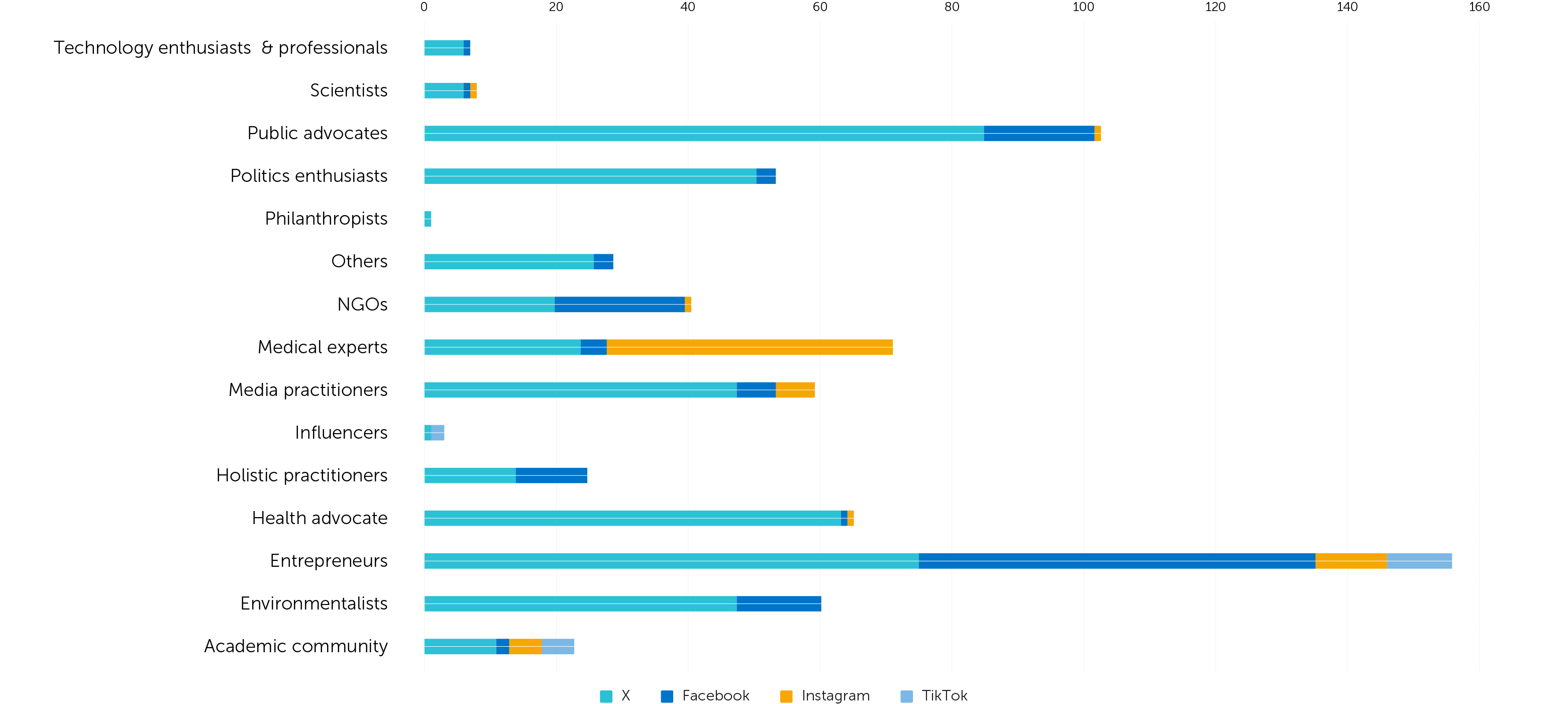
Graph 1: Major User Type Across Platforms.
Graph 1 illustrates the distribution of major user types across social media platforms, revealing diverse engagement patterns. Entrepreneurs and the academic community are the most active, with a strong presence on Facebook and Platform X, reflecting their focus on networking, promotion, and professional discussions. Media practitioners and NGOs show balanced engagement across platforms, favouring visually oriented spaces like Instagram and TikTok to reach wider audiences. In contrast, technology enthusiasts and philanthropists remain niche groups with limited yet focused activity. The user type across platforms reveals that Platform X and Facebook are highly favoured by broad user groups like entrepreneurs and public advocates, making them ideal for campaigns focused on business and advocacy. Meanwhile, Instagram and TikTok, with their visual appeal, are suitable for engaging media practitioners and NGOs aiming for creative storytelling and impactful visuals.
Content Type Across Platforms
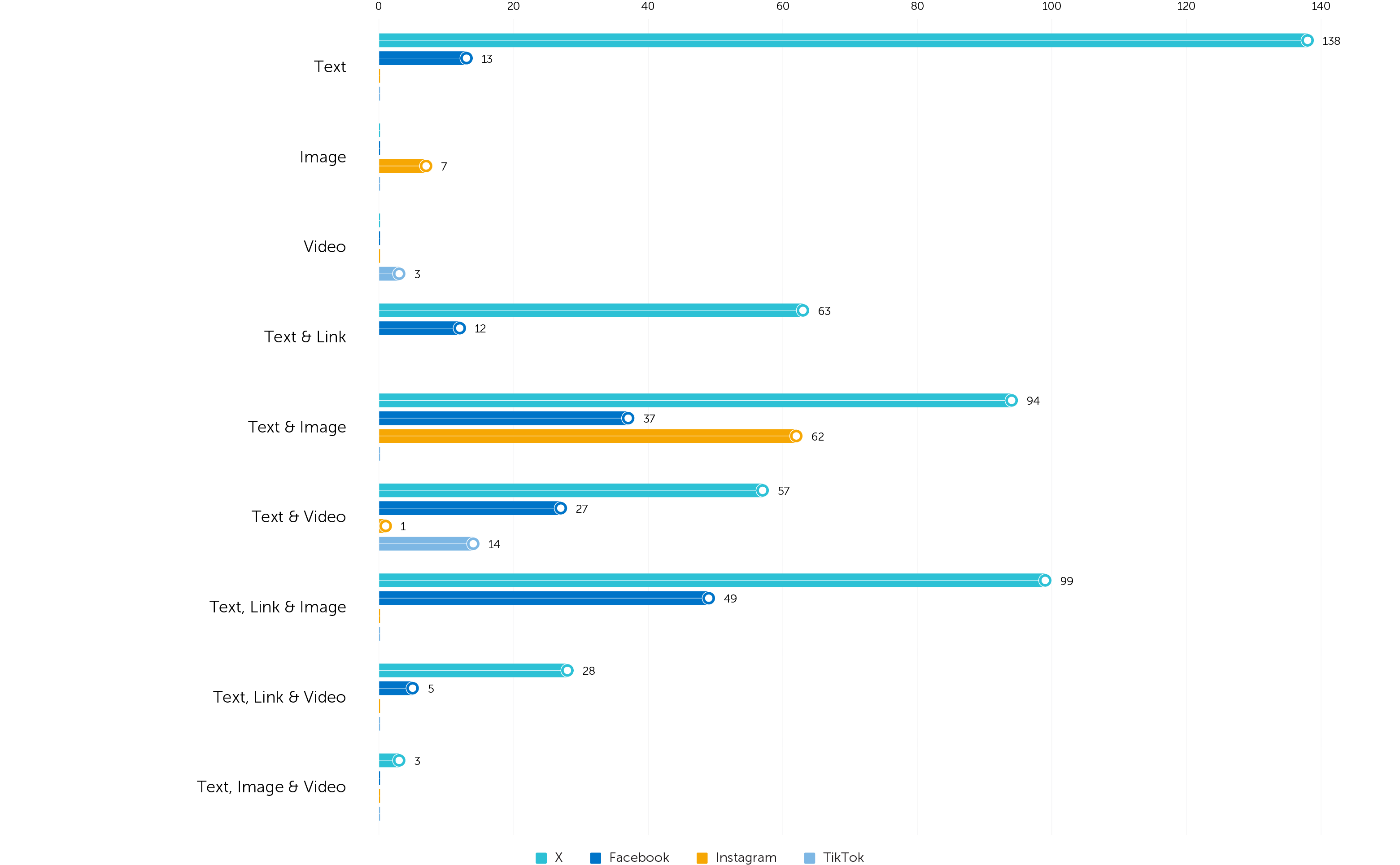
Graph 2: Content Type Across Platforms.
Graph 2 highlights the distribution of content types across social media platforms, revealing distinct preferences and engagement dynamics. Text-based posts dominate Platform X, reflecting its role as a hub for information-sharing and discussions. In contrast, Instagram and TikTok favour visually engaging formats, such as Text & Image and Text, Link, & Image, aligning with their multimedia focus. Facebook and Instagram also show a strong preference for multimedia content, combining text with visuals to enhance user interaction. Meanwhile, TikTok has relatively lower content diversity but excels in video-driven interactions, aligning with its core functionality. Results for content types across platforms emphasise the need for strategic content planning. While text remains dominant on Platform X, the growing trend of hybrid and multimedia content across Facebook, Instagram, and TikTok signals the importance of diversifying content to maintain relevance and capture audience attention. Creators and marketers should align their strategies to include visually appealing and interactive content for platforms where such formats thrive, ensuring they cater to platform-specific audience preferences effectively.
Engagement Metrics Across Platforms
| Engagement Metrics | X | TikTok | TOTAL | ||
|---|---|---|---|---|---|
| Likes | 26,752 | 10,965 | 8,820 | 157,425 | 203,962 |
| Comment/Replies | 2,561 | 932 | 933 | 2,941 | 7,367 |
| Shares/retweet | 12,497 | 5,427 | - | 9,267 | 27,191 |
| Emotions | 0 | 484 | 0 | 0 | 484 |
| TOTAL | 41,810 | 17,808 | 9,753 | 169,633 | 239,004 |
Table 4: Engagement Metrics Across Platforms.
Table 4 highlights the engagement metrics provided revealing significant differences in user interactions across platforms, highlighting varying preferences and behaviours. The total engagement metrics (239,004) reflect X's dominance, followed by TikTok, Facebook, and Instagram. Likes constitute the highest engagement metric, with a total of 203,962 across all platforms. TikTok leads substantially with 157,425 likes, showcasing its strength as a platform for quick, highly engaging content that resonates widely with users. Facebook and Instagram follow with 26,752 and 10,965 likes, respectively, indicating their steady but less dramatic role in generating this type of engagement. Shares or retweets emerge as the second most prominent form of engagement, with 27,191 across platforms. Platform X shows a notable lead with 12,497 shares, demonstrating its utility for content that users find valuable and worth amplifying. TikTok also exhibits strong sharing behaviour, with 9,267 shares, underscoring its viral content potential. Comments and replies, while relatively smaller in volume (7,367), highlight meaningful user interactions, with X again showing the highest activity. Platform X leads in all engagement types except emotions, which Facebook dominates with 484 instances, suggesting a unique emotional connection on that platform. These findings highlight TikTok's virality, Facebook's emotional appeal, and Platform X's versatility for diverse interactions.
User Type and Engagement Metrics
| No. | User Type | Likes | Comment/Replies | Shares/retweet | Emotions | TOTAL |
|---|---|---|---|---|---|---|
| 1. | Academic community (n=23) | 44,865 | 984 | 1,375 | 5 | 47,229 |
| 2. | Entrepreneurs (n=61) | 24,649 | 827 | 6,765 | 181 | 32,422 |
| 3. | Environmentalists (n=158) | 8,768 | 620 | 4,617 | 11 | 14,016 |
| 4. | Health advocate (n=66) | 3,398 | 146 | 908 | - | 4,452 |
| 5. | Holistic practitioners (n=25) | 190 | 100 | 66 | 9 | 365 |
| 6. | Influencers (n=3) | 90,522 | 1,424 | 1,336 | - | 93,282 |
| 7. | Media practitioners (n=60) | 6,131 | 386 | 6,721 | 9 | 13,247 |
| 8. | Medical experts (n=72) | 3,634 | 1,237 | 4,295 | 10 | 9,176 |
| 9. | NGOs (n=41) | 1,006 | 139 | 923 | 152 | 2,220 |
| 10. | Others (n=29) | 1,025 | 86 | 375 | 19 | 1,505 |
| 11. | Philanthropists (n=1) | 2 | - | - | - | 2 |
| 12. | Politics enthusiasts (n=54) | 717 | 113 | 288 | 15 | 1,133 |
| 13. | Public advocates (n=104) | 6,397 | 1,294 | 2,009 | 77 | 9,777 |
| 14. | Scientists (n=8) | 84 | 2 | 5 | - | 91 |
| TOTAL | 41,810 | 17,808 | 9,753 | 169,633 | 239,004 |
Table 5: User Type and Engagement Metrics.
Table 5 shows that the data on user engagement across various user types reveals significant trends and insights into content performance and audience behaviour. Influencers stand out with the highest total engagement (93,282), largely driven by an impressive number of likes (90,522). This highlights the influence and reach of a small but powerful group, demonstrating their ability to generate mass attention with minimal direct interaction through comments or shares. Similarly, the academic community exhibits strong engagement (47,229), with balanced contributions across likes, comments, and shares, suggesting their content appeals to a diverse audience interested in knowledge-based discussions. Entrepreneurs, media practitioners, and public advocates generate moderate engagement levels, with totals of 32,422, 13,247, and 9,777, respectively. Entrepreneurs, in particular, show a strong focus on shares (6,765), indicating their content is highly shareable and relevant for professional networks. Conversely, niche groups like holistic practitioners, scientists, and technology enthusiasts show limited but focused interaction, signalling that their content may cater to smaller, more targeted audiences. To optimise engagement, strategies should consider both the reach and interaction types associated with each user group. High-engagement groups like influencers and academics can drive visibility, while entrepreneurial and media practitioners can amplify reach through shareable content. Efforts targeting niche groups should prioritise tailored, high-value content to maximise impact within these specialised communities. This approach ensures alignment with audience behaviour and platform dynamics for effective engagement.
Content Themes and Engagement Metrics
| No. | User Type | Likes | Comment/Replies | Shares/retweet | Emotions | TOTAL |
|---|---|---|---|---|---|---|
| 1. | Advocacy and activism (n=128) | 2,354 | 278 | 1,162 | 168 | 3,962 |
| 2. | Community & social interactions (n=10) | 29 | 91 | 84 | 14 | 218 |
| 3. | Engagement with authorities & experts (n=5) | 100 | 17 | 57 | - | 174 |
| 4. | Environmental considerations (n=10) | 160 | 8 | 102 | 1 | 271 |
| 5. | Health concerns (n=166) | 20,252 | 1,206 | 8,978 | 107 | 30,543 |
| 6. | Influence and visibility (n=6) | 92,911 | 1,491 | 1,332 | - | 95,734 |
| 7. | Information reliability (n=45) | 3,262 | 759 | 435 | - | 4,456 |
| 8. | Personal and professional interests (n=193) | 66,484 | 2,275 | 7,787 | 74 | 76,620 |
| 9. | Technological interest (n=149) | 16,992 | 1,237 | 6,179 | 119 | 24,527 |
| TOTAL | 202,544 | 7,362 | 26,116 | 483 | 236,505 |
Table 6: Content Themes and Engagement Metrics.
Table 6 reveals that the data on engagement by content themes provides valuable insights into user preferences and the effectiveness of different types of content in generating interactions. Influence and visibility emerge as the most engaging theme, with a total of 95,734 engagements, driven primarily by an extraordinary number of likes (92,911). This highlights the popularity of content focused on influential figures and visibility-oriented topics, which likely appeal to a broad audience seeking aspirational or high-profile narratives. Similarly, personal and professional interests secure the second-highest engagement (76,620), with a balanced contribution from likes, comments, and shares, reflecting the widespread relevance of this theme in addressing users' individual and career-related concerns. Themes like health concerns (30,543) and technological interest (24,527) generate substantial engagement, particularly through shares and likes, indicating their appeal as both informative and actionable content areas. On the other hand, niche themes such as advocacy and activism (3,962) and information reliability (4,456) show more targeted interaction, likely from audiences who prioritise community-focused and fact-checked content. The high engagement levels for themes like influence & visibility, and personal & professional interests suggest that campaigns focusing on these areas can maximise reach and interaction. Meanwhile, themes such as health concerns and technological interest highlight the importance of offering informative, shareable content. advocacy and reliability-focused content may require a tailored approach to appeal to their specific audiences but remain vital for fostering trust and community involvement. Aligning content strategies with these insights can ensure optimal engagement across diverse user groups.
RO3 – TO IDENTIFY THE CORRELATIONS BETWEEN TYPES OF CONTENTS, PREFERENCES, BEHAVIOUR, SENTIMENTS AND PERCEPTIONS
Correlation Between Variables
| No. | Themes | Correlation Analysis | Value | Result | Discussion |
|---|---|---|---|---|---|
| 1. | User Type and Platforms | User Type and Platforms | Pearson Chi-Square: (X² = 1188.521, df = 60, p < 0.001) Likelihood Ratio: (X² = 358.417, df = 60, p < 0.001) |
Significant association The distribution of user types differs significantly across platform types |
Each user type has own preferred platform in discussing RF-EMF issues. |
| 2. | Content Type | Content type and user type | Pearson Chi-Square: (X² = 299.015, df = 98, p < 0.001) Likelihood Ratio: (X² = 260.116, df = 98, p < 0.001) |
Significant association The distribution of content types varies significantly across different user types |
Each user type has preferred content type in discussing RF-EMF. |
| 3. | Preferences (Content Themes) | User type and preferences of content themes | Pearson Chi-Square: 181.627, 84 degrees of freedom, p-value of 0.000 Likelihood Ratio test, with a value of 183.709, a p-value of 0.000 |
Significant association The distribution of content themes varies significantly across different user types |
Each of the user types has different preferences of content themes in discussing RF-EMF. |
| 4. | Behaviour | Platform and engagement metrics | Pearson Chi-Square: (X² = 599.372, df = 45, p < 0.001) Likelihood Ratio: (X² = 486.986, df = 45, p < 0.001) |
Significant association Engagement metrics vary significantly across different platforms |
Choice of platform determines the engagement metrics in discussing RF-EMF. |
| 5. | User Type and Engagement Metrics | User type and engagement metrics | Pearson Chi-Square: (X² = 420.739, df = 210, p < 0.001) Likelihood Ratio: (X² = 321.965, df = 210, p < 0.001) |
Significant association Different user types exhibit distinct engagement patterns |
Each user type shows distinct engagement patterns with their followers in discussing RF-EMF. |
| 6. | User Type and Active/Passive Engagement | User Type and Active/Passive Engagement | Pearson Chi-Square: X² = 748.160, df = 30, p < 0.001) Likelihood Ratio: (X² = 54.913, df = 30, p = 0.004) |
Significant association Active and passive engagement behaviours differ significantly across user types |
Each of user type reveals their behaviour in discussing the RF-EMF whether active or passive discussions. |
| 7. | Sentiment | Positive | Culture, health and wellness | Indicating that positivity is linked with wellness-focused and health-related discourse | Social media users discussed culture, health, and wellness in a positive tone when referencing RF-EMF. |
| 8. | Sentiment | Negative | Culture, technology, lifestyle, physical, health and illness | Indicating that negativity is associated with the identified themes here in daily life | Social media users addressed culture, technology, lifestyle, physical health, and illness in a negative tone when discussing RF-EMF. |
Table 7: Correlation Between Variables.
RO4 – TO RECOMMEND IN DETAIL COMMUNICATIONS APPROACHES AND STRATEGIES FOR INSTILLING/INCREASING AWARENESS AT TARGETED DEMOGRAPHICS SUCH AS ENVIRONMENTALISTS, NGOS, EXPERTS, ACADEMICIANS, ANONYMOUS AND IDENTIFIED USERS
This research proposed pragmatic strategies embedded into user types in social media.
Content Themes Discussed by Users
| Theme of Contents | Total Users (Months) | Strategies (Platforms) | Total Users (Months) |
|---|---|---|---|
| Factors - preferences | 103 | X | 163 |
| Interest - contents | 323 | 103 | |
| Strategies | 285 | 14 | |
| TikTok | 5 | ||
| Total | 711 | Total | 285 |
Table 8: Content Themes Discussed by Users.
From the 15 identified users, eight (8) categories of communication strategies were categorised based on the objective to engage, message contents, framing and practical tactics.
Communication Strategies Proposed for Each Identified User
| Category | User | Objective to Engage | Message Content | Framing | Practical Tactics |
|---|---|---|---|---|---|
| 1. |
|
|
|
|
|
| 2. |
|
|
|
|
|
| 3. |
|
|
|
|
|
| 4. |
|
|
|
|
|
| 5. |
|
|
|
|
|
| 6. |
|
|
|
|
|
| 7. |
|
|
|
|
|
| 8. |
|
|
|
|
|
Table 9: Communication Strategies Proposed for Each Identified User.
Recommendation
First, given the growing influence of social media personalities in shaping public discourse, the research should place a stronger emphasis on the role of influencers in disseminating information about RF-EMF emissions. Influencers can serve as key opinion leaders, particularly in raising awareness and addressing misinformation. Their platforms and audiences offer unique opportunities to amplify credible information and engage specific demographics effectively. It is important to leverage their reach and influence in content strategies.
Second, to refine the focus of analysis and enhance engagement insights, it is advisable to prioritise platforms that facilitate in-depth discussions, such as LinkedIn, Quora, Reddit, Stack Exchange, Discord, Medium, Clubhouse, and Telegram channels and groups. These platforms enable users to participate in meaningful, long-form conversations, making them ideal for exploring nuanced behavioural and sentiment patterns. For instance, LinkedIn's professional network can be instrumental in engaging experts and academics, while Quora and Reddit offer diverse, user-driven discussions that provide rich qualitative data. Narrowing the focus to one (1) such platform can yield actionable insights and enable a more targeted approach to user behaviour, sentiment, and communication strategy.
Third, due to the dynamic nature of social media—where users often delete content or remain invisible and anonymous—capturing and analysing data in real-time or over an extended period requires robust monitoring systems. Future research should incorporate in-depth interviews using purposive sampling to obtain reliable data. This approach allows researchers to explore various perspectives, such as public perceptions, the role of regulatory bodies, risk communication model development, and technology adoption concerning RF-EMF. Additionally, quantitative studies could assess awareness among Malaysians regarding RF-EMF issues, technology adoption compliance with RF-EMF standards, safety practices, and relevance.
Fourth, longitudinal studies would complement these efforts by tracking shifts in public sentiment as technology evolves and new controversies emerge. These areas collectively contribute to refining communication strategies, enhancing public trust, and bridging gaps between public perception and scientific evidence.
Finally, interdisciplinary approaches that integrate behavioural psychology, neuroscience, and digital literacy could offer deeper insights into how individuals process RF-EMF information and interact with it online. For example, future research could examine the role of visual media in risk communication, assessing how infographics, videos, and interactive formats influence public understanding and trust.
Conclusion
The findings of this study present an interconnected framework that contributes to the development of ideal risk communication strategies for addressing RF-EMF emissions. The data reveal a predominance of negative sentiment among social media users, reflecting underlying public anxieties about safety, health implications, and the potential societal impacts of RF-EMF technologies. This negative sentiment aligns with the significant involvement of Public Advocates and Entrepreneurs in the discourse, aimed at promoting societal safety and ensuring informed decision-making while supporting the expansion of technological innovation across industries and communities. Their active engagement underscores a shared concern for public welfare and the need to address these issues comprehensively. The preference for content types such as Personal and Professional Interests and Health Concerns as the most discussed topics demonstrates users' inclination to explore RF-EMF issues in depth. This tendency highlights a collective effort to gather diverse and detailed information, particularly through multimedia and textual formats, which facilitate deeper engagement and understanding. By analysing these patterns of user behaviour and sentiment, this research identifies an opportunity to design audience-specific risk communication strategies. Effective strategies would address the needs and concerns of targeted groups, leveraging their preferred content formats and addressing key themes to enhance trust, provide clarity, and counter misinformation. This approach ultimately strengthens public discourse and ensures that communication aligns with the informational and emotional needs of the audience, particularly in fostering awareness and informed decision-making regarding RF-EMF emissions.
References
Abdulmajeed, H., J., Sali, A., Riyadh, M., Wali, S. Q., Li, L., & Osman, A. (2023).
Machine Learning Modeling for Radiofrequency Electromagnetic Fields (RF-EMF) Signals from mmWave 5G Signals. IEEE Access, https://doi.org/10.1109/access.2023.3265723
Alexa, M., & Zuell, C. (2000).
Text analysis software: Commonalities, differences and limitations: The results of a review. Quality and Quantity, 34(3), 299-321.
Bodewein, L., Dechent, D., Graefrath, D., Kraus, T., Krause, T., & Driessen, S. (2022).
A systematic review of the physiological and health-related effects of radiofrequency electromagnetic field exposure from wireless communication devices on children and adolescents in experimental and epidemiological human studies. PLoS ONE, 17(6). https://doi.org/10.1371/journal.pone.0268641
Caplan, M., & Purser, G. L. (2019).
Qualitative inquiry using social media: A field-tested example. Qualitative Social Work, https://doi.org/10.1177/1473325017725802
Cervi, L.; Divon, T. (2023).
Playful Activism: Memetic Performances of Palestinian Resistance in TikTok #Challenges. Social media and society. https://doi.org/10.1177/20563051231157607
Chen, C.; Ma, Q.; Deng, P.; Lin, M., Peng, G.; He, M.; Lu, Y.; Huifeng, P.; He, Z.; Zhou, C.; Zhang, Y.; Zhengping, Y.; Lei, Z. (2021).
1800 MHz Radiofrequency Electromagnetic Field Impairs Neurite Outgrowth Through Inhibiting EPHA5 Signaling. Frontiers in Cell and Developmental Biology, https://doi.org/10.3389/FCELL.2021.657623
Creswell, J. W. (2003).
Research design: Qualitative, quantitative, and mixed methods approaches (2nd ed.). Thousand Oaks, CA: Sage Publications.
Fernandez, Prasana Rosaline; Ng, Kwan-Hoong; Kaur, Surinderpal.
Risk Communication Strategies for Possible Health Risks From Radio-Frequency Electromagnetic Fields (RF-EMF) Emission by Telecommunication Structures. Health Physics 116(6):p 835-839, June 2019. | DOI: 10.1097/HP.0000000000001037
Field, A. (2018).
Discovering Statistics Using IBM SPSS Statistics (5th ed.). SAGE Publications.
Fonseca, C., Wood, L. E., & Andriamahefazafy, M. (2023).
Survey data of public awareness on climate change and the value of marine and coastal ecosystems. Data in Brief, 47, 108924. https://doi.org/10.1016/j.dib.2023.108924
Gao, Y.; Xie, Z.; Sun, L.; Xu, C.; Li, D. (2021).
Characteristics of and User Engagement With Antivaping Posts on Instagram: Observational Study. JMIR public health and surveillance. https://doi.org/10.2196/29600
Hanson, W. E., Creswell, J. W., Plano Clark, V. L., Petska, K. S., & Creswell, J. D. (2005).
Mixed methods research designs in counseling psychology. Journal of Counseling Psychology, 52(2), 224–235. https://doi.org/10.1037/0022-0167.52.2.224
Johnson, R. B., & Onwuegbuzie, A. J. (2004).
Mixed methods research: A research paradigm whose time has come. Educational Researcher, 33(7), 14–26. https://doi.org/10.3102/0013189X033007014:contentReference[oaicite:0]{index=0}
Lin, X.; Sarker, S.; Featherman, M. (2019).
Users' Psychological Perceptions of Information Sharing in the Context of Social Media: A Comprehensive Model. International Journal of Electronic Commerce. https://doi.org/10.1080/10864415.2019.1655210
Lotto, M.; Menezes, T. S.; Hussain., I. Z.; Tsao, S.; Butt., Z. A.; Morita, P. P.; Cruvinel, T. (2022).
Characterization of misleading fluoride information on Instagram: An infodemiology study (Preprint). Journal of Medical Internet Research https://doi.org/10.2196/37519
Malhotra, N. K. (1999).
Marketing research: An applied orientation (3rd ed.). Upper Saddle River, NJ: Prentice Hall.
Mazar, H., & Ball, D. J. (2021).
Strengths and limitations of conventional approaches to the risk assessment and management of EMF exposure from 5G and B5G networks. Frontiers in Communication Networks, 2, 731172. https://doi.org/10.3389/frcmn.2021.731172
Ministry of Communication- https://www.kkd.gov.my/en/public/news/19448-tiga-prinsip-komunikasi-ketika-krisis-saifuddin accessed on 16 May 2024
Muhammad, N. (2019).
An analysis to determine the most suitable type of multimedia used on Facebook social media platforms. International Journal of Advance Research, Ideas and Innovations in Technology, 5, 2146-2154.
Onwuegbuzie, A. J., & Collins, K. M. T. (2007).
A typology of mixed methods sampling designs in social science research. The Qualitative Report, 12(2), 281–316. https://doi.org/10.46743/2160-3715/2007.16388:contentReference[oaicite:1]{index=1}
Pallant, J. (2020).
SPSS Survival Manual: A Step by Step Guide to Data Analysis Using IBM SPSS. Routledge.
Rao, A., Ahuja, A., Kansara, S., & Patel, V. (2021).
Sentiment Analysis on User-generated Video, Audio and Text. 2021 International Conference on Computing, Communication, and Intelligent Systems (ICCCIS), 24-28. https://doi.org/10.1109/ICCCIS51004.2021.9397147.
Rodríguez-Ibáñez, M., Casañez-Ventura, A., Castejón-Mateos, F., & Cuenca-Jiménez, P. M. (2023).
A review on sentiment analysis from social media platforms. Expert Systems with Applications, 223, 119862. https://doi.org/10.1016/J.ESWA.2023.119862
Sanussi, S.N & Siarap, K. (2014).
Peranan perhubungan awam dan komunikasi krisis: Kajian terhadap Kementerian Kesihatan Malaysia Dalam Penanganan Wabak SARS. Journal of Social Sciences and Humanities, 9, 2, 125-134, ISSN: 1823-884x
Scott, G., Conlon, L., & Wilson, C. (2020).
Facebook reactions: how are they used and which personality factors predict their use?. Social media and society, 9, 190-213.
Scott, P., & Jacka, J. (2012).
Social Media: An Overview, 1-18. https://doi.org/10.1002/9781119202585.CH1.
Sears, D., & Freedman, J. (1967).
SELECTIVE EXPOSURE TO INFORMATION: A CRITICAL REVIEW. Public Opinion Quarterly, 31, 194-213. https://doi.org/10.1086/267513.
Shakil Hameed, N.M. (2020).
https://www.bernama.com/bm/tintaminda/news.php?id=1862184 accesses on 16 may 2024
Smith, J. & Milnes, L. (2016).
Social media: the relevance for research. Evidence-Based Nursing, https://doi.org/10.1136/EB-2016-102475
Strauss, A., & Corbin, J. (1998).
Basics of qualitative research: Techniques and procedures for developing grounded theory (2nd ed.). Sage Publications.
Suarez, A., M; Clarke, K. C. (2022).
A geographical and content-based approach to prioritise relevant and reliable tweets for emergency management. Cartography and Geographic Information Science. https://doi.org/10.1080/15230406.2022.2081257
Thomas, D. R. (2006).
A general inductive approach for qualitative data analysis. American Journal of Evaluation, 27(2), 237-246. https://doi.org/10.1177/1098214005283748
Titanji, B. K.; Abdul-Mutakabbir, J. C.; Christophers, B.; Flores, L. E.; Marcelin, J. R.; & Swartz, T. H., (2022).
Social Media: Flattening Hierarchies for Women and Black, Indigenous, People of Color (BIPOC) to Enter the Room Where It Happens. Clinical Infectious Diseases, https://doi.org/10.1093/cid/ciac047
Tran, N.T.; Jokic, L.; Keller, J.; Geier, J.U.; Kaldenhoff, R. (2023).
Impacts of Radio-Frequency Electromagnetic Field (RF-EMF) on Lettuce (Lactuca sativa)—Evidence for RF-EMF Interference with Plant Stress Responses. Plants 2023, 12, 1082. https://doi.org/10.3390/plants12051082
Walker, K.; Burns, K. (2019).
#13ReasonsWhy Health Professionals and Educators are Tweeting: A Systematic Analysis of Uses and Perceptions of Show Content and Learning Outcomes. Health Communication. https://doi.org/10.1080/10410236.2018.1461171
World Health Organization - https://iris.who.int/handle/10665/326853 accessed on 16 May 2020.