
TOPIC
11
Agriculture Technical Vocational Education and Training (ATVET) Capacity Building: Readiness and Marketability
LEAD RESEARCHER
Assoc. Prof. Dr. Roziana Shaari
UNIVERSITI TEKNOLOGI MALAYSIA
TEAM MEMBERS
Dr. Irza Hanie Binti Abu Samah
UNIVERSITI TEKNOLOGI MALAYSIA
Dr. Azlineer Binti Sarip
UNIVERSITI TEKNOLOGI MALAYSIA
Dr. Junaidah Binti Yusof
UNIVERSITI TEKNOLOGI MALAYSIA
Dr. Mohamad Abdillah Bin Royo
UNIVERSITI TEKNOLOGI MALAYSIA
Ts. Dr. Mohamad Zhurad Bin Haron
KOLEJ VOKASIONAL TANJUNG PUTERI
En. Mohd Hambali Bin Mohd Jailani
UNIVERSITI PUTRA MALAYSIA
Abstract
Malaysia is facing a critical shortage of skilled local labour, particularly in meeting the demands of the Industrial Revolution 4.0 (IR4.0). This study examined strategies to enhance agricultural technical and vocational education and training (ATVET) to reduce reliance on foreign labour and promote automation and digitalisation in the agri-food sector. It examined the factors influencing youth engagement in agriculture, the challenges faced by young people and the alignment of ATVET with market demands and career aspirations. The study also assessed the role of education in preparing graduates for digital applications and identified gaps in current practices, aligning with key national frameworks such as the 12th Malaysia Plan, National Agriculture and Food Policy 2.0, and Dasar Pendidikan Teknikal dan Latihan Vokasional (TVET) Negara. Using a mixed-methods approach, the study integrated behavioural insights (Acyclic Behaviour Change Diagrams) to assess readiness, barriers, and intervention effectiveness. The findings highlighted that motivators such as the farm-community ecosystem, career prospects, and sector viability, are counterbalanced by challenges such as the gap between theoretical knowledge and practical application. Both graduates and educators emphasise the need for practical training and exposure to modern technologies, including Internet of Things "IoT", automation, and data analytics. The study recommends using YouTube and TikTok to showcase success stories of young agricultural entrepreneurs and thus raising public awareness of the sector's potential. To close the gap in graduate recruitment, the industry should tailor recruitment to the specific needs of the agricultural sector, including roles in agricultural science, engineering and technology. Other recommendations include working with research institutes to promote smart agricultural curricula, introducing tax incentives for companies that invest in ATVET infrastructure or training programmes, and enhancing educators' competencies. As this study highlights the mismatch between ATVET capacities and market needs, and underlines the urgency of modernising agricultural education, future research should investigate the effectiveness of different digital integration models in ATVET curricula. In addition, the employability of agricultural VET graduates and their broader impact should be reassessed, along with strategies to change societal perceptions of agricultural occupations.
Keywords: Agricultural Technical and Vocational Education and Training (ATVET), Youth engagement, Behavioural insights, Readiness, Agropreneurship
Introduction
The digital revolution in Malaysia, marked by the adoption of automation technology across various service and industrial sectors, requires a highly skilled workforce capable of managing advanced technologies, machines, and devices. The IoT and robotics automation are among the sectors that demand skilled labour. Failure to upskill human capital to meet these demands may lead to serious challenges, including a rise in unemployment due to the mismatch between an oversupply of unskilled workers and a shortage of skilled labour (Khairol Anuar & Aizathul Hani, 2020). Malaysia has also been working to strengthen the agri-food sector by adopting the latest technologies to ensure food security. However, the younger generation's perception of agriculture as "dirty, dangerous, and difficult" (often called the three Ds) has led to a lack of interest in the sector, which could affect the country's long-term food security (Azeez et al., 2023). This study aims to identify strategies to bridge the skills shortage in Malaysia's digital revolution, focusing on upskilling the labour force and encouraging the younger generation to join the agri-food sector. By addressing these challenges, Malaysia could ensure a sustainable and resilient future for its economy and food security.
Talent management issues, particularly in the area of skills, have led to a mismatch between the skill providers and the human capital required in various industries (Malik & Venkatraman, 2017). Students often do not have the necessary skills to meet the demands of the labour market, leading to unemployment across all industries. According to the Asian Development Bank (Ra et al., 2015), one factor contributing to this mismatch is graduates' low awareness of their career prospects. Many graduates become unemployed because the skills they acquire are not functional or relevant to industry demands. Studies by Mustapha (2017) and Hashim et al (2019) suggest that technical and vocational education in Malaysia should be refined, especially in terms of training models and curricula, to overcome the skills mismatch and reduce society's negative perception of vocational education. Despite long-standing efforts to change the stigma attached to TVET, the initiatives put in place have so far failed to improve the image of TVET in Malaysia. A study by the Boston Consulting Group (Puckett et al., 2012) shows that developing countries such as Malaysia face the perception that the quality of TVET is inferior to that of general academic education in universities.
Studies by Ibrahim & Nashir (2022) found that the trend of the number of students opting for education in agriculture is declining, although the Institute of Labour Market Information and Analysis (ILMIA) reports that about 1.9 million jobs will be created in the agricultural sector by 2030. The challenge for ATVET is not only to attract more students to study agriculture, but also to motivate graduates from different disciplines to become actively involved in the sector and make a contribution (New Straits Times, Mar 2, 2024). The decline in youth engagement in agriculture and reluctance to pursue a career in the agricultural sector is not unique to Malaysia but can also be observed in developing countries such as Nigeria. Although the agricultural sector was proposed by industry stakeholders, it was excluded from the Critical Occupations List (MyCOL 2022/2023) due to insufficient or inconclusive evidence (TalentCorp, 2023). This exclusion highlights the need to better understand the factors that motivate or demotivate young people and the challenges they face when entering agribusiness (Raof et al., 2020).
Literature Review
Many industrialised and developing countries have linked the rise of local entrepreneurship to the current economic boom. Asian countries such as Korea, Japan and Taiwan have shown remarkable success in boosting their economic growth through the promotion of local entrepreneurship (Gatto & Rusciano, 2023; Seyoum, 2024). The agricultural sector has attracted significant attention globally in addressing the challenge of food security, and Malaysia is no exception to this trend (Abiri et al., 2023). Agropreneurship refers to farmers engaging in the cultivation of crops or plants and producing agricultural products to generate income (Jaafar et al., 2023). In Malaysia, to support the new agricultural policy that aims to equip farmers with the necessary skills and knowledge to become entrepreneurs, various initiatives have been introduced to educate and train agro-entrepreneurs (Jaafar et al., 2023).
With technological advancements in today's economy, the application of digital agriculture may boost food production and farming systems through artificial intelligence, connectivity protocols and automation (Jaafar et al., 2023). The impact of digital applications on career entry in agriculture has been analysed by Unay-Gailhard & Brennen (2022). Social and normative factors, as well as a lack of awareness of the new opportunities in this profession, were cited as factors for the low participation of young people in the agricultural sector. In Indonesia, for example, there is a problem with the ageing of the workforce due to the low interest of youth in the agricultural sector and their perception that this sector is not competitive (Ngadi et al., 2023). According to Som et al. (2018), the active participation of young people is crucial for agrarian reforms to keep pace with the evolving global economy.
As the youngest nation in the world, India has considerable youth potential that could greatly benefit the agricultural sector. However, despite this potential, youth participation in agriculture has regrettably declined. In Spain, factors such as digital literacy, gender differences in education and training, educational barriers to digitalisation and the availability of innovation platforms are important social factors that influence the success of the digitalisation of agriculture. (Sadjadi & Fernández, 2023). Young people are often portrayed as disinterested in traditional farming practices; however, they also show a propensity to innovate by adopting modern farming techniques, equipment and digital technologies (Toumbourou et al., 2023).
Walker and Hofstetter (2016) reported that it is worth learning about ATVET from different contexts in developing countries (Table 1).
Best Practices of ATVET in Developing Countries
| Country | Best Practices |
|---|---|
|
Georgia 
|
The "Skills for Agriculture" project, financed by UNDP and SDC, and the support for agricultural vocational schools in Laos (SDC, implemented by HELVETAS), as well as the extensive experience of HELVETAS in the field of agricultural vocational training in Kyrgyzstan. (HELVETAS – is a Swiss association for international cooperation). |
|
Kenya 
|
The six-month practical training programme is aimed at young people who have completed high school or a post-secondary education institution. The hands-on training is conducted at the Latia Model Farm and a number of cooperating farms and agribusinesses. |
|
Benin 
|
The programme includes both practical and entrepreneurial curricula. A key success factor is the system of cascading information and teaching, which creates a large network of farmers (each trained graduate is encouraged to train five other farmers). The successful implementation of the Songhai model is also attributed to the emphasis on entrepreneurial skills, which are fostered through the personal leadership of the director. The director provides training to "change attitudes" towards entrepreneurship and advocates the utilisation of local resources, the integration of traditional and modern agricultural practices, the adaptation of technologies and the diversification of activities. |
|
Ethiopia 
|
The main objective is to increase the number of male and female graduates from selected ATVET colleges who have the skills and knowledge required by the labour market and thus promote Ethiopia's commercial agricultural sector. The Faculty of Agriculture at Dalhousie University and other implementing partners are using their expertise in applied learning models to support Ethiopian trainers in delivering education programmes that meet the country's priorities. |
Table 1: Best Practices of ATVET in Developing Countries.
BEHAVIOUR MODIFICATION
Examining the challenges, problems and importance of ATVET emphasises the influence of social norms, individual awareness and uncertainty about future careers. This inherent complexity makes the integration of Behavioural Insights (BI) essential for this study. Behaviour modification, also known as the BI approach, is an inductive method of great importance that is used by large organisations such as the Organisation for Economic Co-operation and Development (OECD). This approach integrates perspectives from psychology, cognitive science and social science, and uses empirical tests to analyse how people make decisions. It is widely used and increasingly recognised by decision-making bodies, particularly in the development of national policies (Ruggeri, 2018). Empirical evidence from previous studies shows the effectiveness of this approach in changing various behaviours, including lifestyle choices (Mangnyo & Arai, 2020), cognitive processes and perceptions (Nikiforos et al., 2020), dietary habits (Kim et al., 2020), consumer intentions (Ali et al., 2021), and panic buying behaviour (Naeem & Ozuem, 2021).
Despite the growing body of research on the application of behavioural insights in various fields, there is limited evidence of their effectiveness in changing behaviours and perceptions related to agriculture and agribusiness. The aim of this study is to explore the potential of the behavioural insights approach in influencing agricultural behaviours, particularly among youth, and in shaping perceptions of agriculture as a viable career path. By examining the cognitive processes, social influences, and contextual factors that influence decision-making in the agricultural context, this research aims to contribute to the development of evidence-based interventions and strategies that promote youth engagement in agriculture and agropreneurship. This study will use Acyclic Behaviour Change Diagrams (ABCDs) (Peters & Crutzen, 2021) to illustrate the logic model (also known as 'theory of change') underlying interventions aimed at changing certain aspects of individuals' cognition and/or behaviours. ABCD is more like a human understanding of behaviour change. In particular, using this approach, the study examines the cognitive processes, social influences, and contextual factors that influence decision-making related to agricultural behaviours and agropreneurship among youth.
Methodology
This study used a mixed method approach combining both quantitative and qualitative techniques. The quantitative aspect included questionnaires that were analysed through surveys, while the qualitative component included interviews and focus groups. The ATVET providers involved in this study were the Institut Pertanian Serdang (IPS), Institut Pertanian Ayer Hitam (IPAH), Kolej Komuniti Rembau (KKR), and the University College of Agroscience Malaysia (UCAM). For the quantitative study, a purposive sample of 224 students was selected from the four institutions. The institutional setting, geographical proximity, duration of study, financial constraints, and cross-sectional nature of the study were considered in the selection process. Based on a Power analysis, the suggested sample size for the bivariate normal model was 138. Descriptive and correlative statistics will be used to analyse the quantitative data. Jamovi was also used to analyse the change in behaviour. In Jamovi, the Confidence Interval Based Estimation of Relevance (CIBER) test was used to determine the mean values of a predictor for ATVET. The qualitative data were analysed using a thematic approach.
Data collection for Objective 1 focused on active students from all ATVET providers. Objective 2 included alumni and interns, while Objective 3 included these participants alongside feedback from ATVET providers. Feedback was collected from key individuals such as deans, department/programme heads and lecturers of relevant programmes such as Agriculture Certificate, Certificate in Agrotechnology, Diploma in Agriculture Science, Diploma in Plantation Management and Bachelor of Agriculture Science (Hons). For Objective 4, both ATVET providers and industry representatives were surveyed to assess the role of training in preparing for future jobs (especially digital applications) and to identify gaps in current training practices. Data saturation was sought to ensure comprehensive responses. In the final phase, a study framework was developed using the Behavioural Insights (BI) approach (ABCD model). Recommendations were made based on evidence-based findings.
Findings and Analysis
DEMOGRAPHIC
The data for the quantitative study were based on 224 responses collected from the perspective of students from four ATVET institutions. For the qualitative data collection, saturation was achieved, and the participants involved are summarised as follows:
Best Practices of ATVET in Developing Countries
| Participants | No | Research Questions (RQ) |
|---|---|---|
| Alumni / Graduates | 12 |
|
| ATVET providers* |
IPAH - 3 IPS - 4 KKR - 4 UCAM – 5 |
|
| Industry representatives | 8 |
|
*Note: participants were lecturers including the responsible programme coordinator.
Table 2: Participants for the Qualitative Data Phase (Interviews and Focus Group Discussion).
RESEARCH OBJECTIVE 1: TO IDENTIFY THE FACTORS MOTIVATING OR DEMOTIVATING YOUNG PEOPLE TO ENGAGE IN AGRICULTURAL PRACTICES AND AGROPRENEURSHIP.
Factor analysis was conducted to determine the factorial structure of the items. Initially, an exploratory factor analysis (EFA) was performed to examine the internal structure and identify items with low factor loadings for possible elimination. An orthogonal varimax rotation was applied to minimise the likelihood of incorrect statistical solutions and to clarify uncorrelated factors. The EFA results indicated a Kaiser-Meyer-Olkin (KMO) value of 0.80 and a significant Bartlett's test (χ² = 2163, p < .01), confirming the suitability of the data for factor analysis. As shown in Table 3, the EFA had revealed a three-factor structure: Factor 1 consisted of 11 items (B1–B10 and B15), Factor 2 comprised six items (B11–B14, B16–B17), and Factor 3 consisted of three items (B18–B20). While factor loadings above 30 were deemed acceptable (Orcan, 2018), Item 15 was removed during the Confirmatory Factor Analysis (CFA) due to its low contribution to Factor 1 internal consistency (as measured by Cronbach's alpha). Drawing on prior research (Abdul Aziz & Norhlilmatun Naem, 2013; Šimpachová Pechrová et al., 2013; Thephavanh et al., 2022; Nor et al., 2015), the three factors were categorised as Farm-to-Community Ecosystem Building (Factor 1), Future View (Factor 2), and Perceived Sector Viability (Factor 3). Table 3 shows the results of the factor analysis based on 20 items (B1 - B20).
Factor Loadings
| No. | Factor | Uniqueness | ||
|---|---|---|---|---|
| Farm-to-community ecosystem building | Future view | Perceived sector viability | ||
| B1 | 0.413 | 0.578 | ||
| B2 | 0.519 | 0.536 | ||
| B3 | 0.714 | 0.503 | ||
| B4 | 0.548 | 0.547 | ||
| B5 | 0.693 | 0.471 | ||
| B6 | 0.697 | 0.504 | ||
| B7 | 0.782 | 0.488 | ||
| B8 | 0.721 | 0.422 | ||
| B9 | 0.608 | 0.406 | ||
| B10 | 0.543 | 0.485 | ||
| B15 | 0.466 | 0.485 | ||
| B11 | 0.618 | 0.381 | ||
| B12 | 0.602 | 0.627 | ||
| B13 | 0.872 | 0.266 | ||
| B14 | 0.470 | 0.516 | ||
| B16 | 0.312 | 0.540 | ||
| B17 | 0.329 | 0.491 | ||
| B18 | 0.652 | 0.458 | ||
| B18 | 0.412 | 0.673 | ||
| B18 | 0.388 | 0.869 | ||
*Note: 'Minimum residual' extraction method was used in combination with a "oblimin' rotation.
Table 3: Factor Loadings.
Factor analysis was conducted to determine the factorial structure of the items. Initially, an EFA was performed to examine the internal structure and identify items with low factor loadings for possible elimination. An orthogonal varimax rotation was applied to minimise the likelihood of incorrect statistical solutions and to clarify uncorrelated factors. The EFA results indicated a KMO value of .80 and a significant Bartlett's test (χ² = 1236, p < .01), confirming the suitability of the data for factor analysis. As shown in Table 4, the EFA revealed a two-factor structure: Factor 1 consisted of 6 items (C5-C10) and Factor 2 included six items (C1-C4). All items were included during the CFA based on internal consistency (Cronbach's alpha). Based on prior research (Abdul Aziz & Norhlilmatun Naem, 2013; Šimpachová Pechrová et al., 2013; Thephavanh et al., 2022; Nor et al., 2015), the two factors were categorised as Financial & resource barriers (Factor 1) and socio-cultural & infrastructural barriers (Factor 2).
Factor Loadings
| No. | Factor | Uniqueness | |
|---|---|---|---|
| Financial & resource | Socio-cultural & infrastructural | ||
| C1 | 0.641 | 0.528 | |
| C2 | 0.794 | 0.276 | |
| C3 | 0.753 | 0.337 | |
| C4 | 0.713 | 0.357 | |
| C5 | 0.705 | 0.345 | |
| C6 | 0.684 | 0.440 | |
| C7 | 0.621 | 0.501 | |
| C8 | 0.698 | 0.372 | |
| C9 | 0.548 | 0.521 | |
| C10 | 0.726 | 0.453 | |
*Note: 'Minimum residual' extraction method was used in combination with a 'varimax' rotation.
Table 4: Factor Loadings.
The thematic analysis revealed that involvement in Malaysian agriculture and agribusiness is primarily motivated by several interrelated factors. These included a strong family support system that facilitated intergenerational knowledge transfer, access to resources and emotional support, professional mentors and role models who provided guidance in the industry, extensive educational experiences that combined theory and practice, and a growing awareness of food security issues. Other motivating elements include the diverse career prospects in the public and private sectors and various forms of institutional support through government initiatives and financial aid programmes.
"I am the child of a small-scale farmer under RISDA (Rubber Industry Smallholders Development Authority). Basically, my father works under a RISDA officer... My parents are rubber tappers…" (AUC03)
"For me, youths today don't seem to recognise who their mentors are. Teenagers nowadays want to have an idol. When they have an idol, only then will they become interested in something…" (AUC04)
"The lack of practical sessions and a focus on classroom discussions only has led to limited exposure to agriculture…" (SUC01)
"In Malaysia, food banks last a maximum of one week. That's related to food security. In short, food is something everyone needs. (SUC04)
Agriculture is important because [it] contributes to [the] basic need of food." (SUC03)
"The agriculture-related job sector is vast, encompassing companies like IOI, Sime Darby, and RISDA. (SUC03)
There are plenty of job opportunities, but the question is whether one is willing to live in rural areas." (AUC01)
However, there were some significant obstacles that prevented participation in the agricultural sector. These included significant implementation challenges, such as financial barriers to entry into agriculture and limited access to land and equipment, persistent social barriers, such as negative perceptions of agricultural occupations and the cultural stigmatisation of working in agriculture, and technical competence related to adapting to the workplace environment.
"Financial loans are needed to make the business a success." (SUC03)
"Youth are less interested in agriculture because of the perception among those around them that agriculture is merely about planting trees and holding a hoe." (AUC03)
"In secondary school, we didn't study chemistry, biology, or physics... but when we enter the field of agriculture, we have to learn about chemistry." (AUC03)
"Unexpected knowledge. For example, when it comes to fertilisers, there are specific ratios involved." (SUC03)
RESEARCH OBJECTIVE 2: TO INVESTIGATE THE CHALLENGES FACED BY YOUTH IN ENTERING AGROPRENEURSHIP
Based on the thematic analysis, the challenges faced by youth entering agribusiness in Malaysia could be categorised into several key areas. Among the major obstacles were the limitations in education, including insufficient practical training and unexpected requirements in purely scientific subjects, as well as the persistent problems with social perception, where agriculture is often perceived as mere manual labour without prestige. There are also technological barriers, as Malaysian agriculture is considered to be lagging behind other countries in terms of modernisation, as well as workplace issues arising from rural location requirements and challenges in managing the workforce, especially foreign workers.
"I didn't expect to need so much science knowledge when I joined agribusiness. We didn't get much practical training in school, so jumping into this field was a real challenge." (SUC01, SUC03)
"My parents were surprised when I told them I wanted to work in agriculture." (AUC03)
"...that's because people still think it's just about hard labour and no career growth." (AUC04)
"...that's one of the big problems here. The sector is still lagging behind in terms of modernisation." (SUC04)
"The job opportunities are there, but living in rural areas isn't easy." (AUC01)
"...and managing workers, especially foreign labour, adds another layer of complexity." (AUC02)
The analysis also identified significant financial and competitive hurdles for emerging agribusinesses. These include the requirement for substantial initial investment, limited awareness of available financial support and strong competition for positions in established businesses. Additionally, concerns regarding career advancement opportunities and the limited number of jobs in the sector lead to uncertainty about long-term career prospects, potentially discouraging entry into agricultural entrepreneurship. This combination of educational, social, technological, financial, and competitive challenges creates a complex barrier system that must be addressed to encourage greater participation in Malaysian agribusiness entrepreneurship.
RESEARCH OBJECTIVE 3: TO EXAMINE THE PERSPECTIVES AND NEEDS OF EDUCATION PROVIDERS AND GRADUATES REGARDING THE ALIGNMENT OF ATVET WITH MARKET DEMANDS AND CAREER ASPIRATIONS
The thematic analysis of the orientation of the ATVET programmes (Agricultural Technical and Vocational Education and Training) revealed a clear separation between the institutional challenges and the experiences of the graduates. From the ATVET providers' perspective, significant gaps exist in the delivery of practical and technical skills, with insufficient practical training and limited exposure to new technologies such as IoT and drones. They also face challenges in collaborating with industry, as companies are often reluctant to partner due to costs, leading to mismatch between educational outcomes and industry needs. Other concerns highlighted by providers include issues of market fit, student preparation, and the need for educational innovation through practice-based assessments and regular curriculum reviews.
"Now we have included one subject - a subject related to IoT and such. Because we have it up there, at the farm where we have fertigation that uses the IoT system."
"We don't have enough facilities. So, I will take students out, for example going to MARDI to see what we don't have here."
"At the plantation estates, they use these technologies... Fertiliser distribution uses GPS to measure how many acres are covered and so on, these things are recorded."
"We have asked several plantation companies for co-operation, but they always have other problems such as time and place for training. They say that training students requires additional labour and resources. One company told me directly: 'we can't afford to slow down our operations to train students who may not even work for us.' That makes it really difficult to give students real industry experience."
From the graduates' perspective, several key issues of adaptation became apparent. They emphasised the need for a better balance between practical and theoretical learning, with a strong preference for practical experience. Graduates also highlighted gaps in technology integration, particularly in relation to modern farming practices and digital farming technologies. Career development emerged as a major theme, particularly concerning the urban-rural gap in employment opportunities, while entrepreneurial development was found to require improvement in business management skills and market knowledge. They also addressed the mismatch between academic preparation and workplace demands, along with persistent social and cultural barriers, such as negative public perceptions of agricultural professions. Taken together, both perspectives underscored to the need for better synchronisation between educational programmes and industry requirements.
RESEARCH OBJECTIVE 4: TO ASSESS THE ROLE OF EDUCATION IN PREPARING GRADUATES FOR FUTURE WORK (DIGITAL APPLICATIONS) IN ATVET AND IDENTIFY GAPS IN CURRENT EDUCATIONAL PRACTICES
The thematic analysis of digital preparation in ATVET revealed a clear contrast between the perspectives of training providers and industry. ATVET providers highlighted fundamental challenges associated with digital inclusion, including limited and outdated technological infrastructure, resource scarcity and difficulties in providing hands-on experience with modern agricultural technologies. They have been attempting to address these issues through curriculum updates, including the integration of IoT digital documentation skills and basic data analysis, despite facing significant infrastructure and resource constraints. Educational institutions are also striving to adapt by collaborating to adapt through collaborations with industry and research partnerships, although these initiatives remain limited by inadequate facilities and insufficient access to resources.
"We've revised our curriculum to include digital agriculture components like data analytics and smart farming. But implementation is another story. We need proper facilities, training equipment, and software licenses - all these cost money. We've tried partnering with some agritech companies, but they want us to pay for equipment installation and maintenance. With our current budget constraints, we can only do so much."
"We've tried to introduce IoT modules, but with our limited budget, we can only afford basic sensors. The industry uses much more advanced equipment."
From an industry perspective, there are substantial concerns regarding the digital readiness of graduates, as recent graduates are often insufficiently technologically prepared for modern agricultural work. Industry participants emphasised the specific requirements for digital technologies, including automation, robotics, IoT applications, and data analytics capabilities. They noted that there are significant educational gaps in hands-on experience, technology integration and data skills, and that graduates often possess outdated technology skills, and require extensive additional training once hired. The industry also stressed the need for multidisciplinary knowledge that combines traditional agricultural expertise with digital skills. Furthermore, it highlighted the challenges associated with retaining and applying knowledge, particularly in adapting theoretical training to practical situations in the workplace.
"When we hire fresh graduates, less than twenty per cent - just as an example - when we talk about mechanisation, sometimes they've never even encountered the equipment that we use in the industry."
"What we need are people who understand both traditional agriculture and modern technology. But what we get are graduates who neither fully grasp the basics of crop science nor can handle our digital monitoring systems. We're dealing with IoT sensors, data analytics for yield prediction, automated sorting systems - but these graduates have never even seen such equipment during their studies."
"Usually, they require another set of education when we hire them."
RESEARCH OBJECTIVE 5: TO DEVELOP EVIDENCE-BASED RECOMMENDATIONS FOR PROMOTING YOUTH PARTICIPATION IN THE AGRICULTURAL SECTOR AND FOSTERING THE GROWTH OF AGROPRENEURSHIP IN MALAYSIA, CONTRIBUTING TO THE ACHIEVEMENT OF DECENT WORK OPPORTUNITIES (SDG8)
Based on the thematic analysis, three main themes were identified: educational enhancement, industry support, and policy recommendations. Both ATVET providers and industry stakeholders offer complementary suggestions. ATVET providers emphasise the need to improve training in three key areas: greater integration of technologies supported by policy changes, stronger alignment between industry and training, and enhanced development of resources to support these initiatives. Their focus is aimed at creating a stronger educational foundation that can better prepare students for modern agricultural careers.
From an industry perspective, the recommendations are more detailed and action-oriented and cover three main areas. First, they suggest improving education through increased collaboration between industry and academia, providing more hands-on training opportunities and updating technology-focused curricula with clearly defined career pathways. Secondly, they recommend greater industry support through mentoring programmes, improved infrastructure, research collaborations, and better compensation packages to attract talent. Thirdly, they emphasise the need for policy recommendations, including better funding for agricultural education, updated regulations for new technologies, improved rural internet connectivity, and programmes to encourage agricultural entrepreneurship. Above all, the industry's proposals emphasise practical solutions that bridge the gap between education and actual workplace demands, while creating a more attractive and sustainable agricultural sector for youth.
"Universities should involve their students during their studies, not just for short internships. Let them experience modern agriculture in action, working with our intelligent cultivation systems. That is how we will build the next generation of agricultural entrepreneurs."
"The government must get involved. We are trying to run high-tech farms in areas with poor internet connectivity. How can we introduce IoT systems or drone monitoring if the basic infrastructure is not in place? Also, current regulations don't even cover many new agricultural technologies. We need updated policies, better rural infrastructure and serious funding for agricultural education if we want young people to see this profession as a viable career path."
"Look at successful agricultural countries - they combine education with practical application. We should create agricultural innovation centres where students can work with industry partners on specific projects. In addition, remuneration must reflect the complexity of modern agriculture. We are no longer just looking for labour, but for tech-savvy professionals who understand both agriculture and digital systems. The packages we offer should reflect this expertise."
RESEARCH OBJECTIVE 6: TO DEVELOP A BEHAVIOURAL INSIGHTS FRAMEWORK ON PROMOTING YOUTH PARTICIPATION IN ATVET
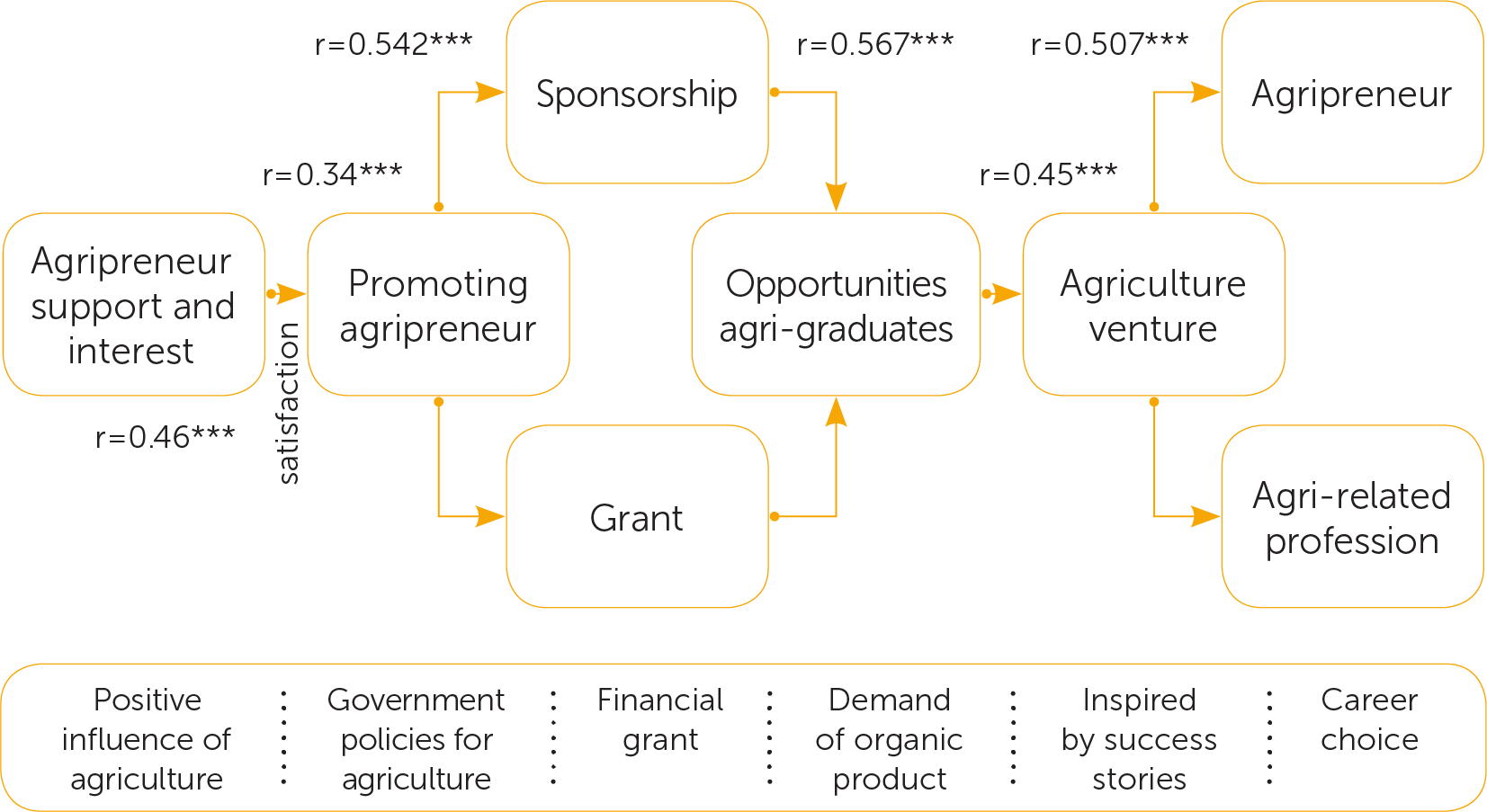
The Behavioural Insights framework to effectively encourage youth participation in ATVET and agropreneurship was developed from the quantitative data using CIBER (Confidence Interval-Based Estimation of Relevant) analysis (Figure 1), and the framework was illustrated using the ABCD model (Figure 2). The study utilised CIBER analysis to assess the ATVET predictors, employing Jamovi software to generate visual diagrams. The analysis examined the relationship between the determinants (motivating/demotivating factors) presented in the left panel and ATVET career choice behaviour displayed in the right panel, based on the complete data from 224 participants.
The analysis resulted in an R² value of 0.60, indicating that 60% of the variance in ATVET behaviour is explained by the determinants. In the visualisation, colour-coded diamonds represent the meanings of the items: Red for low scores, green for higher scores and blue for medium scores, with grey indicating weaker associations. The results showed a positive correlation between the motivating factors and ATVET career adoption, illustrated by consistent green diamonds in both panels. Each diamond represents 99.99 per cent confidence intervals for the meanings of the items, while the surrounding dots display individual participants' scores, of individual participants to avoid overplotting.
Acyclic Behaviour Change Diagram: ATVET Career Adoption
*Note: *** p < .001
Figure 2: Acyclic Behaviour Change Diagram: ATVET Career Adoption.
The framework highlights the interconnected factors influencing career choices in agriculture-related professions, emphasising the progression from interest and support for agropreneurship to the establishment of agricultural ventures. At its foundation, agropreneurial interest and societal appreciation for agriculture have played a pivotal role, with a strong correlation (*r = 0.46, p < 0.001*) between these factors and the promotion of agropreneurs. This promotional effort is critical as it bridged interest with actionable support systems, such as sponsorships and grants. Sponsorships, in particular, have shown a significant positive association (*r = 0.542, p < 0.001*) with creating opportunities for agri-graduates, while grants contribute indirectly by reinforcing promotional efforts.
These opportunities culminate in agriculture ventures that provided two main career pathways: agropreneurship (*r = 0.507, p < 0.001*), involving entrepreneurial activities, and agriculture-related professions, including employment or research roles. Supporting influences such as government policies, growing demand for organic products, and inspiring success stories had further enhanced the appeal of these careers. Overall, the framework illustrated how systemic support, financial mechanisms, and practical opportunities collectively fostered the development of agricultural careers, guiding individuals toward meaningful contributions in the sector.
Recommendations
Recommendation that can be proposed from this study are:
1. Change Socio-cultural Perceptions of Agriculture
Campaigns targeting specific groups such as students, parents, communities and other stakeholders should aim to make ATVET a preferred educational pathway. Using YouTube or TikTok to showcase success stories of young agricultural entrepreneurs could raise public awareness of agricultural potential. The use of influencers to promote agriculture may also attract young people. In addition, showcasing ATVET trainees and students at international and national competitions or exhibitions in smart farming, hydroponics and agricultural technology innovations, etc. could attract more young people to agriculture. Strong social media campaigns will improve the image of ATVET and inspire the young people, parents and society to support of ATVET.
2. Strong social media campaigns: Overcoming the mismatch problem in the placement of graduates in industry by capturing talent through education
This diversity indicates a clear alignment between the needs of industry and the workforce skills developed by ATVET providers. It is important that ATVET programmes customise their training to the specific needs of the agricultural sector:
a. Agricultural science graduates: These graduates are well suited for positions such as agronomists, farm managers, and supervisors. The programme emphasises the science behind agriculture and combines ecology, biology, chemistry, and genetics to cover plant and animal nutrition and crop, and livestock production. Examples of institutions include Universiti Putra Malaysia, Universiti Sains Malaysia and Institut Pertanian Malaysia.
b. Graduates of the Agricultural Engineering Programme: These graduates are ideal for positions such as agricultural engineers or soil and water conservation engineers. Their expertise lies in environmental management and the application of technologies to optimise agricultural processes. Example of institutions include Universiti Putra Malaysia (Bintulu) and Kolej Felcra.
c. Agricultural Technology Graduates: Graduates of this programme are best employed as technologists or specialists who focus on the application of scientific knowledge and tools to enhance productivity, sustainability and efficiency in food production. Example of institutions include Kolej Vokasional Dato' Lela Maharaja and Kolej Vokasional Tanjung Puteri.
3. Policy and Ecosystem Support
Creating incentives for industry collaboration such as implementing a new system, offering tax reductions for companies that invest in ATVET infrastructure or training programmes. Providing financial aid and infrastructure support to integrate IoT and AI in agriculture. Malaysia's MyDIGITAL programme can introduce a Smart Agriculture Grant for ATVET institutions.
4. Promoting Smart Agriculture Through Technology Adoption
To overcome the challenges of technology accessibility and time commitment by industry when it comes to familiarising ATVET students with current technology, ATVET providers can collaborate with MARDI and local universities to establish smart agriculture labs, incorporating AI-powered precision farming into their courses. At the same time, government agencies can support the establishment of smart agriculture centres to train ATVET students in real-world agricultural technology solutions.
5. ATVET Educators Competency
According to the Malaysian Qualifications Agency (MQA), the body responsible for the accreditation for quality assurance in the Malaysia higher education sector, the accreditation of academic programmes is divided into two sectors: the academic and TVET sectors. In the TVET sector, certification is structured from Level 1 to Level 6. The Technology and Technical Accreditation Standard (TTAS), a subsidiary of the MQA, is responsible for the accreditation of technical and technological programmes and ensures the quality assurance of these programmes. Specifically, TTAS oversees the accreditation of programmes across various levels of the Malaysian Qualifications Framework (MQF), including Level 1 to 3 (Certificates), Level 4 (Diploma), Level 5 (Advanced diploma) and Level 6 (Bachelor's Degrees) offered by education providers.
In addition, the Malaysia Board of Technologists (MBOT) has established the Technology and Technical Accreditation Council (TTAC) as a technical accreditation committee under the MQA to further strengthen the accreditation of technology and technical education programmes. Given these accreditation requirements, it is critical for ATVET instructors to continuously improve their competencies to align with industry and educational standards. With the established standards, instructors are required to undergo an industrial attachment every two years (as prescribed by MBOT) as part of the established standards. For staff development, employees can participate in training programmes to upskill their current skills.
This study has highlighted gaps between education and industry, particularly in relation to technological and digital skills, and emphasised the need for academic staff to undergo targeted training. Various institutions and education providers offer specialised training to address these gaps, particularly in the areas of smart farming, precision agriculture and agribusiness development. Some of the key courses are:
a. Smart Farming & Precision Agriculture – covers IoT, AI, robotics, and data-driven agriculture. Institutions offering this training include MARDI, UPM (Smart Farming Research Cluster) and Universiti Malaysia Sabah (UMS). Notable industry partners include FarmByte (automated vertical indoor farms), HAVVA and Gamuda (indoor farming).
b. Sustainable Agriculture & Agripreneurship Training – focusing on entrepreneurial and technological skills for sustainable and quality agriculture. Institutions offering this training include Universiti Malaysia Kelantan (UMK), UPM Bintulu and Universiti Teknologi MARA (UiTM), in collaboration with organisations such as the Ministry of Industrial Development and Research (DIDR), MARDI and SME Corp Malaysia.
Conclusion
The research findings shed light on critical gaps in the Malaysian ATVET system while offering actionable insights for redesign. The study reveals a complex interplay between motivating factors (Farm-to-Community Ecosystem Building, Future View, and Perceived Sector Viability) and persistent barriers (Financial & Resource Constraints, Socio-cultural Perceptions) that influence youth participation in agriculture. One striking finding is the significant discrepancy in digital literacy. Less than 20 per cent of graduates are considered tech-savvy, highlighting the urgent need to modernise agricultural education.
The study makes several important contributions to this topic.
First, it provides empirical evidence of the mismatch between ATVET capacity and market needs, particularly in terms of digital literacy, practical skills development, and industry alignment.
Second, it highlights the effectiveness of implementation strategies that adopt a dual approach and focus on institutional capacity building and graduate employability. The success of programmes such as MARDI's AgroCube demonstrates how structured training that combines theoretical knowledge with practical application can effectively bridge the gap between education and industry.
Looking ahead, several areas warrant further exploration. Future research could focus on:
• The effectiveness of various models for integrating digital tools in ATVET curricula.
• The long-term impact of work-based learning programmes on graduate employability.
• The role of public-private partnerships in modernising agricultural education.
• Strategies to change societal perceptions of agricultural occupations.
These findings provide a roadmap for policymakers, educators and industry stakeholders to transform agricultural vocational education into a more responsive and effective system. Achieving this vision will require sustained investment in digital infrastructure, curriculum modernisation and stronger partnerships between industry and education. Ultimately, a technology-led ATVET system can position agriculture as an appealing, innovative and sustainable career path for Malaysian youth.
References
Abdul Aziz, A., & Norhlilmatun Naem, S. (2013).
Factors that influence the interest of youths in agricultural entrepreneurship. International Journal of Business and Social Science, 4(3), 1-15.
Abiri, R., Rizan, N., Balasundram, S. K., Shahbazi, A. B., & Abdul-Hamid, H. (2023).
Application of digital technologies for ensuring agricultural productivity. Heliyon.
Ali, M. R., Shafiq, M., & Andejany, M. (2021).
Determinants of Consumers' Intentions towards the Purchase of Energy Efficient Appliances in Pakistan: An Extended Model of the Theory of Planned Behavior. Sustainability, 13(2), 565.
Applanaidu, S. D., Abidin, N. Z., Ahmarofi, A. A., Abdullahi, M. B., & Viandrito, J. (2022).
How Enhancement in Agricultural Education Affects the Employment Opportunities in the Oil Palm Plantation Sector in Malaysia? Journal of Positive School Psychology, 6(3), 9700-9723.
Azeez, R. O., Alaka, N. S., & Lawrence, M. E. (2023).
Farming For People's Wellbeing: An Assessment of Factors That Motivate University Students To Become Agropreneurs. Journal of Management, Innovation and Entrepreneurship, 2(1).
Gatto, A., & Rusciano, V. (2023).
Industrial Policy And Financing Of Innovation For Local Development: Insights From The Hsinchu Science Park, Taiwan. Transformations in Business & Economics, 22(3).
Hashim, S., Utami, P., Rahman, M. H. A., Jumaat, N. F., & Phon, D. N. E. (2019).
Knowledge Construction Process in an Open Learning System Among Technical and Vocational Education and Training (TVET) Practitioners. Journal of Technical Education and Training, 11(1).
Ibrahim, A., & Nashir, I. M. (2022).
Demand-supply mismatch in TVET academic programmes: What is it and what should it Be? Journal of Technical Education and Training, 14(2), 177-189.
Inegbedion, G., & Islam, M. M. (2021).
Willingness and motivation of Nigerian youth to pursue agricultural careers after graduation. International Journal of Agricultural Science, Research and Technology (IJASRT) in Extension and Education Systems, 11(1), 55-69.
Jaafar, M., Jalali, A., Suffarruddin, S. H., & Ramasamy, N. (2023).
The Determinants of Becoming Sustainable Agropreneurs: Evidence from the Bottom 40 Groups in Malaysia. Sustainability, 15(10), 8283.
Kim, S. K., Rocha, N. P. R., & Kim, H. (2020).
Eating control and eating behavior modification to reduce abdominal obesity: a 12-month randomized controlled trial. Nutrition Research and Practice, 15(1), 38-53.
Malik, G., & Venkatraman, A. (2017).
"The great divide": skill gap between the employer's expectations and skills possessed by employees. Industrial and Commercial Training.
Manjula, M., & Sharma, D. (2024).
Teaching Sustainability in Agriculture to Students of Development. In The Contribution of Universities Towards Education for Sustainable Development (pp. 471-487). Cham: Springer Nature Switzerland.
Mangyo, R., & Arai, T. (2020).
Intervention using behavior modification techniques to improve the lifestyle of high-risk metabolic syndrome patients. Journal of physical therapy science, 32(2), 156-160.
Mulinge, W., Bett, C., Magenya, S. M. O., Thuranira, E., Makini, F., & Thuku, B.
Building Skills and Research-Extension Linkages for Sustainable Agricultural Transformation: Insights from Kenya. In Forum for Agricultural Research In Africa (Vol. 8, No. 6, pp. 1-44).
Mustapha, R. B. (2017).
Skills training and vocational education in Malaysia. In Education in Malaysia (pp. 137-153). Springer, Singapore.
Mustapha, R., & Hussain, M. A. M. (2022).
Vocational education and training in Malaysia. In International Handbook on Education in South East Asia (pp.1-28). Singapore: Springer Nature Singapore.
Naeem, M., & Ozuem, W. (2021).
Customers' social interactions and panic buying behavior: Insights from social media practices. Journal of Consumer Behaviour.
Ngadi, N., Zaelany, A. A., Latifa, A., Harfina, D., Asiati, D., Setiawan, B., …& Rajagukguk, Z. (2023).
Challenge of Agriculture Development in Indonesia: Rural Youth Mobility and Aging Workers in Agriculture Sector. Sustainability, 15(2), 922.
Nikiforos, S., Tzanavaris, S., & Kermanidis, K. L. (2020).
Virtual learning communities (VLCs) rethinking: influence on behavior modification—bullying detection through machine learning and natural language processing. Journal of Computers in Education, 7, 531-551.
Ninh, L. K. (2021).
Economic role of education in agriculture: Evidence from rural Vietnam. Journal of Economics and Development, 23(1), 47-58.
Nor, N. M., Masdek, N. N. M., & Maidin, M. K. H. (2015).
Youth inclination towards agricultural entrepreneurship. Economic and technology management review, 10, 47-55.
NST.
Govt aims to fortify TVET in agriculture to ensure food security – Mohamad Sabu By Bernama – March 2, 2024 @ 4:04pm
OECD (2010).
Vocational Education and Training in Germany Strengths, Challenges and Recommendations, OECD, Directorate for Education, Education and Training Policy Division September 2010.
Okoye, K. R. E., & Okwelle, P. C. (2014).
Technical Vocational Education and Training (TVET) as intervention mechanism for global competitiveness: Perspectives from Nigeria. Developing Country Studies, 4(4), 85-91.
Orçan, F. (2018).
Exploratory and confirmatory factor analysis: which one to use first?. Journal of Measurement and Evaluation in Education and Psychology, 9(4), 414-421.
Peters, G. J., & Crutzen, R. (2021).
The core of behavior change: introducing the Acyclic Behavior Change Diagram to report and analyze interventions.
Puckett, J., Davidson, J., & Lee, E. (2012).
Vocational Education. The missing link in economic development. BCG Perspectives. The Boston Consulting Group.
Raof, S. A., Hatib, A., & Atmareni, H. (2020).
The challenges faced by the agriculture lectures in improving teaching delivery at Malaysia agriculture vocational colleges: A competency study. Journal of Educational Research & Indigenous Studies, 2(1), 1-12.
Ridzwan, R., Muhammad, N. M. N., & Rahman, A. A. A. (2017).
Issues and challenges among young entrepreneurs in Malaysia. IOSR Journal of Business and Management, 19(03), 80-84.
Rosli, F., & Hamzah, N. M. (2019).
Factors influencing inclination towards agro-food entrepreneurship among Kelantan youth. Canadian Social Science, 15(5), 48-51.
Ruggeri, K. (Ed.). (2018).
Behavioral insights for public policy: concepts and cases. Routledge.
Sadjadi, E. N., & Fernández, R. (2023).
Challenges and opportunities of agriculture digitalisation in Spain. Agronomy, 13(1), 259.
Samah, I. H. A., Rashid, I. M. A., Naiemah, S. U., Husain, W. A. F. W., Amlus, M. H., & Hamzah, H. (2023, June).
Behavior intention for athlete post retirement life using Acylic Behavior Change Diagram (ABCD). In AIP Conference Proceedings (Vol. 2608, No. 1). AIP Publishing.
Seyoum, B. (2024).
Lessons from Successful Developing Countries. In State Fragility, Business, and Economic Performance: An Ethiopian Perspective (pp. 403-419). Cham: Springer International Publishing.
Šimpachová Pechrová, M., Šimpach, O., Medonos, T., Spěšná, D., & Delín, M. (2018).
What are the motivation and barriers of young farmers to enter the sector?. AGRIS on-line Papers in Economics and Informatics, 10(4), 79-87.
Singh, K., & Misra, M. (2021).
Developing an agricultural entrepreneur inclination model for sustainable agriculture by integrating expert mining and ISM–MICMAC. Environment, Development and Sustainability, 23(4), 5122-5150.
Som, S., Burman, R. R., Sharma, J. P., Padaria, R. N., Paul, S., & Singh, A. K. (2018).
Attracting and retaining youth in agriculture: challenges and prospects. Journal of Community Mobilization and Sustainable Development, 13(3), 385-395.
TalentCorp (2023).
Critical Occupations List (MyCOL) 2022/2023: Sectors Deep Dive For The Malaysia National Skills Registry (MyNSR).
Thephavanh, M., Philp, J. N. M., Nuberg, I., Denton, M., & Alexander, K. (2022).
Narrative insights reveal the motivations of young agricultural entrepreneurs in Laos. Sustainability, 14(20), 13113.
Toumbourou, T. D., Dressler, W. H., Sanders, A., Liu, E., Brown, T., & Utomo, A. (2023).
Who are the future farmers? Media representations of youth in agriculture, food security and 'modern' farming in Indonesia. Asia Pacific Viewpoint, 64(2), 188-208.
Udemezue, J. C. (2019).
Challenges and opportunities of agricultural sector among youths in the twenty first century: The case of Nigeria. Adv. Biotechnol. Microbiol, 14(5), 555896.
Unay-Gailhard, İ., & Brennen, M. A. (2022).
How digital communications contribute to shaping the career paths of youth: a review study focused on farming as a career option. Agriculture and Human Values, 39(4), 1491-1508.
Walker, K., & Hofstetter, S. (2016).
Study on agricultural technical and vocational education and training (ATVET) in developing countries. Swiss Development Corporation (SDC).