
TOPIC
14
A Study of the Feasibility of Generative Artificial Intelligence (Gen AI) and Large Language Models (LLMs) Adoption to Enhance MCMC Knowledge Management Practice
LEAD RESEARCHER
Ts. Dr. Surya Sumarni Hussein
UNIVERSITI TEKNOLOGI MARA
TEAM MEMBERS
Prof. Ts. Dr. Hjh Anitawati Mohd Lokman
UNIVERSITI TEKNOLOGI MARA
Dr. Nur'aina Daud
UNIVERSITI TEKNOLOGI MARA
Pn. Saidatul Rahah Hamidi
UNIVERSITI TEKNOLOGI MARA
Pn. Siti Salbiyah Abdul Geni
UNIVERSITI TEKNOLOGI MARA
Dr. Shuhaida Mohamed Shuhidan
UNIVERSITI TEKNOLOGI PETRONAS
Abstract
This study investigated the feasibility of adopting Generative Artificial Intelligence (Gen AI) and Large Language Models (LLMs) technologies to enhance Malaysian Communications and Multimedia Commission (MCMC) Knowledge Management (KM) practices. Through a comprehensive research methodology grounded in the Diffusion of Innovation theory, the study employed a multi-method approach, including a literature review, interviews, focus group discussions, and expert reviews. The research began with an extensive literature review to understand the current landscape of Gen AI and LLMs adoption in KM practices. Subsequently, semi-structured interviews were conducted to gather insights into the feasibility of integrating Gen AI and LLMs capabilities into MCMC's KM practices. Additionally, focus group discussions (FGD) incorporating the adoption of LEIQ™ framework for SWOT analysis were organised to facilitate collaborative exploration. Through iterative discussions, participants contributed diverse perspectives and collective wisdom to inform the feasibility assessment. Expert reviews were conducted to evaluate and refine the findings derived from the literature review, interviews, and FGD. The synthesis of data from the literature review, semi-structured interviews, FGD, and expert reviews yielded valuable insights and methodologies to enhance the utilisation, organisation, and extraction of knowledge from data within the context of Gen AI and LLMs capabilities. These insights informed the development of frameworks, guidelines, and best practices tailored to advance KM practices in MCMC. The primary goal of this research was to contribute to advancing KM practices by harnessing the potential of Gen AI and LLMs technologies. By leveraging innovative approaches grounded in the diffusion of innovation theory, this study sought to bridge the gap between theory and practice, paving the way for more efficient and effective utilisation of Gen AI and LLMs in MCMC KM practices.
Keywords: Knowledge Management (KM), Generative Artificial Intelligence (Gen AI), Large Language Models (LLMs), Malaysian Communication and Multimedia Commission (MCMC)
Introduction
In recent years, the rapid advancement of Artificial Intelligence (AI) technologies, particularly Generative Artificial Intelligence (Gen AI) and Large Language Models (LLMs), ushered in a new era of possibilities for Knowledge Management (KM) practices across various domains. However, despite the potential advantages, a notable gap existed in the feasibility assessment of integrating these cutting-edge technologies into MCMC's KM practices. The primary purpose of this research project was to address this gap by exploring the feasibility of MCMC's adoption of Gen AI and LLMs capabilities within the domain of KM. Specifically, the study aimed to investigate how adopting these technologies would enhance organisational decision-making processes within the context of MCMC.
At its core, the research sought to provide insights and methodologies that facilitated the efficient utilisation, organisation, and extraction of knowledge from data. The overarching goal of leveraging Gen AI and LLMs was to improve KM practices, optimise decision-making processes, and enhance overall organisational performance. The need for this research stemmed from the growing recognition of the transformative potential of AI technologies in KM. Gen AI and LLMs offer promising solutions to these challenges by enabling more sophisticated data analysis, natural language processing, and knowledge synthesis capabilities.
Furthermore, as organisations increasingly rely on data-driven decision-making, the importance of effective KM practices could not be overstated. By harnessing the power of Gen AI and LLMs, organisations gained a competitive edge in their decision-making processes, unlocking new opportunities for innovation and growth.
This research aims to explore the feasibility of MCMC's adoption of Gen AI and LLMs capabilities with KM and identify how it would enhance organisational decision-making. The main aim of the research is to provide inputs in the form of insights and methodologies that facilitate efficient utilisation, organisation, and extraction of knowledge from data, with the primary goal of advancing data management practices in the context of Gen AI and LLMs capabilities. Henceforth, the research sets its objective (RO) to:
To analyse the current state of KM practices via a literature review exploring existing methodologies and frameworks, focusing on Gen AI and LLMs capabilities application and integration
To evaluate the feasibility of current or future adoption of Gen AI and LLMs in the context of MCMC's KM processes and procedures.
To conduct a SWOT analysis on the potential MCMC organisational impact (with a particular focus on the impact of optimisation and efficiency and accuracy of Gen AI and LLM adoption).
To evaluate the suitability of a KM framework to measure and monitor improvements in data synthesis, organisation, and knowledge extraction; and
Where appropriate for adoption to make recommendations as to the requirements that need to be put in place for Gen AI and LLMs adoption in MCMC.
Through empirical investigation and analysis, the study sought to provide valuable insights and practical recommendations for organisations looking to leverage AI technologies to enhance their KM practices and decision-making capabilities within MCMC.
Theoretical Background
In recent years, the intersection of Gen AI and LLMs has revolutionised KM practices, offering unprecedented information processing, synthesis, and dissemination opportunities. Gen AI and LLMs represent cutting-edge technologies with vast potential in various fields (Ghimire, 2024; Lund et al., 2020; Maione & Leoni, 2021). LLMs, a subset of Gen-AI, offer personalised learning experiences, automate content generation, and enhance interactivity in learning settings (Imran et al., 2024). Gen AI and LLMs excel at processing vast amounts of unstructured data, enabling advanced information retrieval and synthesis capabilities. Through natural language processing (NLP) techniques, these models can extract insights, summarise content, and generate contextual responses, facilitating more efficient knowledge discovery and dissemination processes (Gamieldien, 2023; Euchner, 2023).
Organisations can enhance decision-making processes and drive innovation by leveraging Gen AI and LLMs. These models can analyse complex datasets, identify patterns, and generate predictive analytics, empowering decision-makers with actionable insights. Additionally, they can stimulate creativity and ideation through automated content generation, fostering a culture of innovation within knowledge-intensive environments. Gen AI and LLMs facilitate collaborative knowledge sharing across diverse teams and organisational boundaries. Through chatbots, virtual assistants, and collaborative writing platforms, these models enable real-time communication, knowledge exchange, and collective problem-solving. Moreover, they can personalise content recommendations and provide contextualised support, enhancing the overall effectiveness of collaborative knowledge-sharing initiatives (Gamieldien, 2023; Euchner, 2023).
Looking ahead, the integration of Gen AI and LLMs into KM strategies presents several opportunities and challenges. Future research should focus on enhancing model interpretability, improving multilingual capabilities, and developing robust mechanisms for evaluating and mitigating biases. To get the most out of Gen AI and LLMs KM practices, it is also important to encourage collaboration between people from different fields and set up ethical AI governance frameworks. The integration of AI within KM systems is significantly reshaping how organisations manage and utilise knowledge. AI technologies, including knowledge-based expert systems, neural networks, and case-based reasoning systems, play a crucial role in managing complex knowledge, improving decision-making, and facilitating knowledge sharing within organisations (KM Insider, 2024).
AI-driven KM processes rely heavily on the availability and quality of data. The accuracy and reliability of these AI systems depend on having access to robust and comprehensive datasets. As AI continues to advance, identifying and addressing data needs is essential to maximising the effectiveness of KM initiatives. AI supports efficient categorisation, storage, and retrieval of large volumes of structured and unstructured data, which enhances informed decision-making and innovation (Sharma, Lakhera, & Sharma, 2023). Moreover, the successful application of AI in KM introduces challenges, including data privacy, security, and the need for compliance with relevant regulations. Organisations must ensure that their data management practices are robust enough to protect sensitive information while enabling AI systems to function optimally. As AI becomes more integral to KM, ongoing evaluation of data strategies is necessary to align with the evolving capabilities of AI technologies (Sharma et al., 2023).
Another significant aspect is the construction of intelligent knowledge bases using AI, where AI systems not only manage data but also enhance decision-making processes and knowledge dissemination. This underscores the dual role of AI in both knowledge creation and management, emphasising the need for high-quality data to support these complex functions (Zhu et al., 2023). Furthermore, the implementation of AI in KM processes across various sectors highlights the growing importance of AI in fundamental KM processes, such as knowledge creation, storage, and retrieval, as well as knowledge sharing and application. AI-driven systems offer new approaches to overcoming challenges in KM, enabling organisations to leverage AI for more effective KM (Novalin, Gunawan, & Prihandoko, 2024).
Correlational Analysis
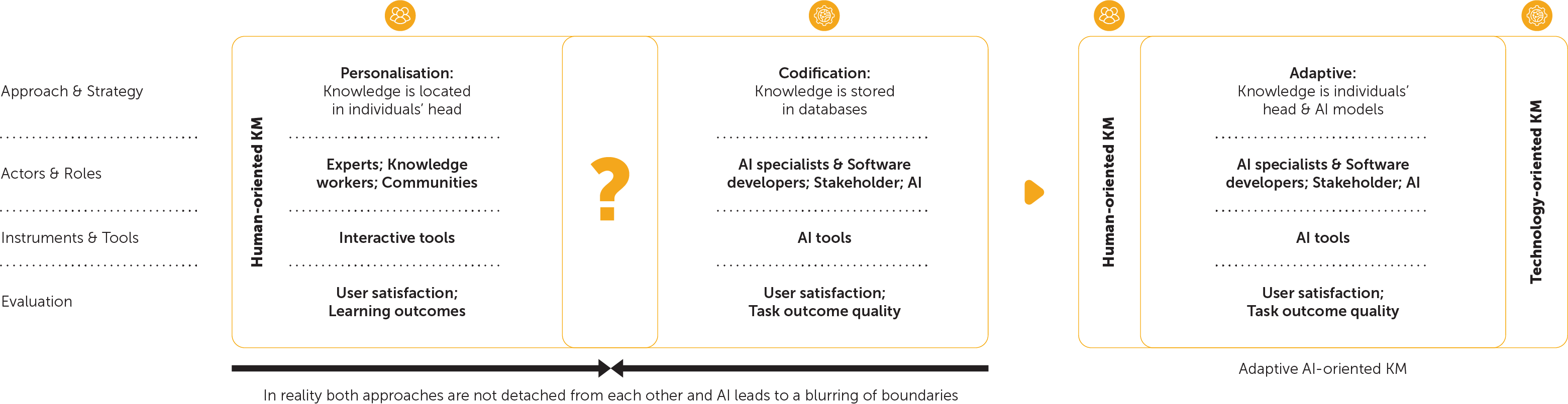
Figure 1: Moving from Traditional KM Approaches Towards an Adaptive AI-oriented KM (Fteimi et. al.,2021)
Figure 1 is a hybrid model that suggests that while knowledge can be stored in AI models and databases, it also remains within individuals (Fteimi et al., 2021). The adaptive AI-oriented approach allows for a balance between user satisfaction and task outcome quality, emphasising the importance of both human and AI roles in KM. Moreover, according to Fteimi and colleagues (2021), as AI systems increasingly rely on vast amounts of data, it becomes crucial to manage and periodically update data inputs to ensure AI models remain relevant and avoid becoming stuck in outdated patterns. Thus, the integration of AI into KM is transforming how organisations manage and utilise knowledge by enhancing decision-making, knowledge sharing, and data management. However, to fully capitalise on AI-driven KM, organisations must address challenges related to data quality, privacy, and regulatory compliance, ensuring robust data strategies align with evolving AI capabilities, specifically with Gen AI.
Gen AI involves ethical challenges that require proactive management, such as ensuring accuracy, including human oversight, encouraging transparency, establishing responsibility, and eliminating biases to promote fairness in AI-generated material and decision-making (Ligot, 2024). There are various concerns associated with Gen AI, including the potential for misinformation, copyright infringement, bias, privacy issues, and hazardous content. It may also result in job displacement, academic dishonesty, environmental damage, and a rising digital gap, while the misalignment of AI systems with human values may result in unexpected unfavourable behaviours (Ligot, 2024).
Methodology
This research was conducted to analyse current KM practices and frameworks, evaluate Gen AI and LLMs adoption feasibility and impact through SWOT analysis at MCMC, assess KM framework effectiveness, and recommend implementation requirements for successful AI and LLM integration in KM processes. The research has conducted a qualitative research design involving four phases to achieve these objectives. Figure 2 illustrates the research phases.
The Research Phases

Figure 2: The Research Phases
Phase I: Theoretical Investigation.
This initial phase formed the foundation of the research through a comprehensive literature review and document analysis. Researchers examined existing KM practices, methodologies, and frameworks, with a specific emphasis on how Gen AI and LLMs were being integrated into KM systems. The data collection involved two main sources: academic literature that covered the theoretical aspects and current developments in the field and internal documents from the Malaysian Communications and Multimedia Commission (MCMC) to understand the current organisational context. This phase established a solid theoretical foundation and identified best practices in AI-enabled KM
Phase II: Feasibility Evaluation.
The second phase employed a qualitative approach through semi-structured interviews based on the Diffusion of Innovation (DOI) theory (Gharaibeh et. al., 2020; Makowsky et al., 2013; Sahin and Rogers, 2006). This phase engaged five key representatives from MCMC's KM department or division, spanning from executive level to top management. These interviews helped assess the practical feasibility of implementing Gen AI and LLMs technologies within MCMC's existing KM processes. The selection of participants from various management levels ensured a comprehensive understanding of both operational and strategic perspectives. This phase determined the organisation's readiness and capacity for AI and LLM adoption.
Phase III: SWOT Analysis.
The third phase utilised Focus Group Discussions (FGD) implementing the LEIQ™ framework (Lokman, 2018) to conduct a thorough SWOT analysis. This phase involved a larger group of 14 representatives from various departments and divisions within MCMC who were actively involved in KM initiatives. This diverse group helped identify the Strengths, Weaknesses, Opportunities, and Threats associated with AI and LLM adoption, providing a comprehensive view of potential organisational impacts. This phase produced a strategic assessment of the potential benefits and challenges of AI implementation.
Phase IV: KMAI Framework Development.
The final phase focused on developing and evaluating a Knowledge Management AI (KMAI) Framework through qualitative analysis and expert review. This crucial phase involved at least three experts drawn from academia, industry, or specialised data management backgrounds. These experts evaluated the framework's effectiveness in improving data synthesis, organisation, and knowledge extraction processes. Their insights and recommendations were instrumental in refining and validating the framework's practical applicability. This phase delivered a validated, comprehensive framework for successful AI integration in MCMC's KM system.
Finally, the research synthesised findings from all previous phases to develop concrete recommendations for the implementation requirements needed for successful Gen AI and LLMs adoption at MCMC. These recommendations addressed technical infrastructure, organisational policies, training needs, and governance frameworks necessary for effective integration. This phase delivered a sound implementation reference that ensured sustainable and responsible AI adoption in MCMC's KM processes.
Analysis and Findings
This section reports the analysis and findings derived from comprehensive research phases, focusing on the theoretical investigation of KM practices in the context of Generative AI (Gen AI) and Large Language Models (LLMs).
Phase I: Theoretical Investigation
Current methodologies in KM are increasingly integrating Gen AI and LLMs to enhance data management and decision-making processes. These technologies facilitate improved data handling, automate tasks, and generate insights, thereby transforming traditional KM paradigms. The integration of Gen AI and LLMs has revolutionised several aspects of KM. Natural Language Processing capabilities allow LLMs to excel in understanding and generating human-like text, making them invaluable for data pipelines and knowledge extraction (Barbon et al., 2024). Furthermore, Gen AI automates routine tasks, enabling organisations to focus on strategic decision-making and innovation (Kaczorowska-Spychalska et al., 2024). The Retrieval-Augmented Generation (RAG) model has significantly improved information storage and retrieval, effectively addressing data scarcity issues (Jeong, 2023). In terms of decision-making impact, LLMs enable organisations to derive actionable insights from large datasets (Yu et al., 2023). The collaborative co-design approach ensures that AI applications meet user needs and ethical standards while maintaining effectiveness (Yu et al., 2023). However, organisations must address critical concerns such as data quality, ethical considerations, and the need for human oversight to fully leverage these technologies (Kaczorowska-Spychalska et al., 2024). Countries worldwide are implementing innovative KM practices leveraging Gen AI and LLMs. Figure 3 shows some notable examples.
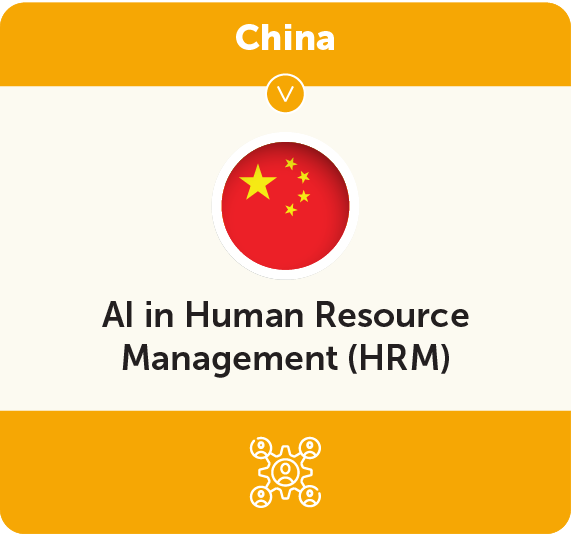
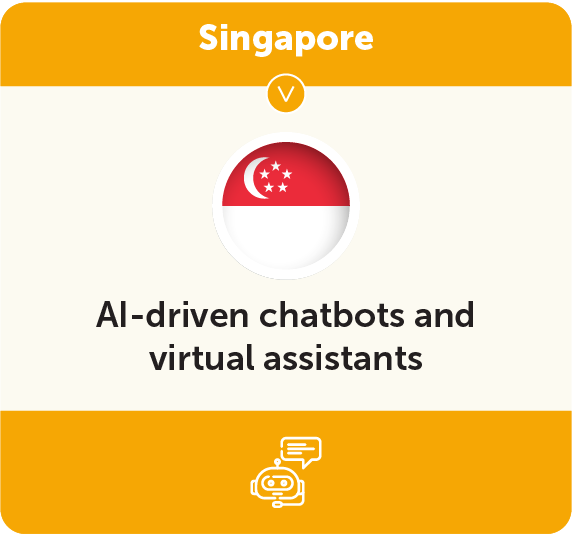
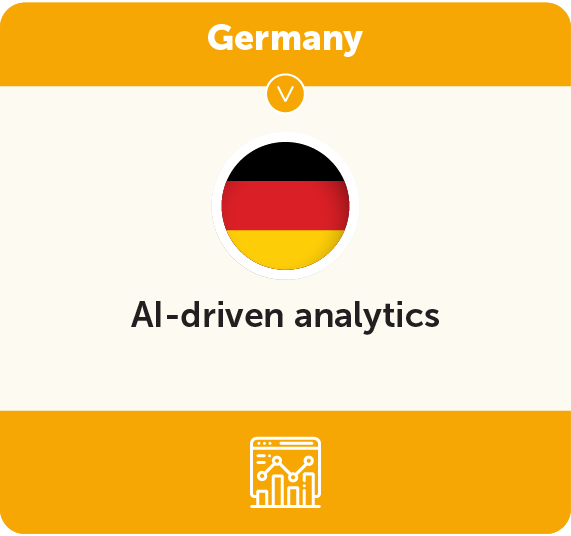
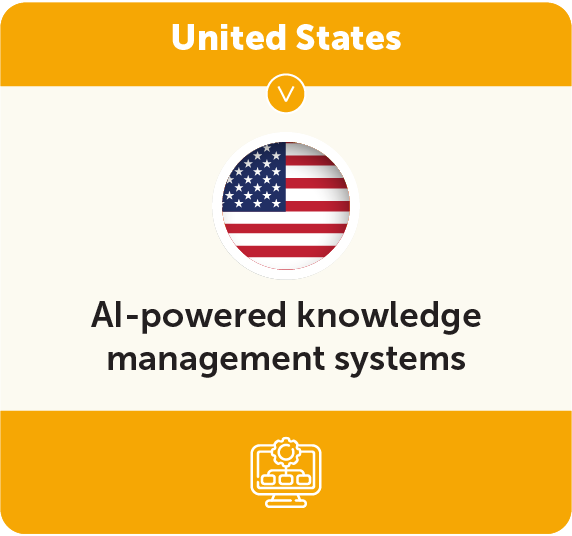
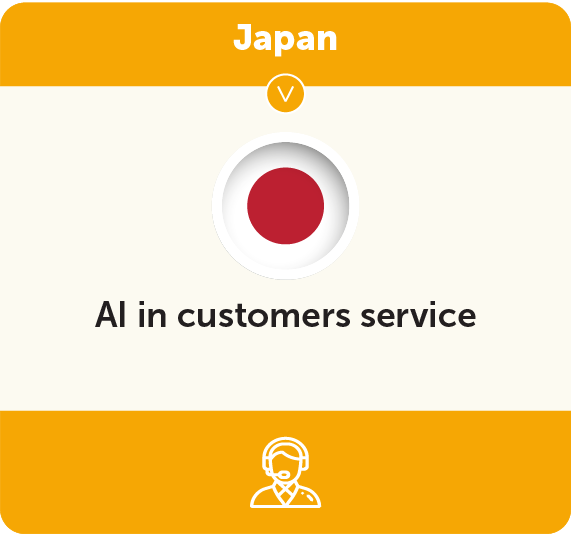
Figure 3: Best practices of the new generation on KM practices according to some countries.
China has implemented AI in human resource management, streamlining recruitment, performance evaluation, and employee development. Their AI-driven approach enables efficient processing of vast data volumes, providing deeper insights into employee performance and potential (Xue, 2022). Singapore has focused on enhancing citizen engagement through AI-driven chatbots and virtual assistants. Their integration of AI into government services provides real-time responses and automates routine tasks, significantly improving public service efficiency (Sharon & GovTech, 2024). Germany leads in industrial applications, using Gen AI for predictive maintenance, quality control, and process optimisation. Siemens exemplifies this approach, utilising Gen AI to optimise manufacturing processes and predict equipment failures, thereby reducing downtime and maintenance costs (Siemens, 2024). The United States emphasises internal KM, as demonstrated by Microsoft's implementation of Azure Cognitive Services for AI-driven insights and automated document processing (Microsoft, 2024). Japan excels in AI-driven customer service applications. Companies like SoftBank utilise AI chatbots to handle customer inquiries efficiently, ensuring high satisfaction levels through personalised interactions (Softbank, 2024).
These diverse applications demonstrate how different countries and sectors leverage Gen AI and LLMs to enhance KM practices, drive efficiency, improve customer satisfaction, and foster innovation. Current research validates the rapid advancement of AI technologies, particularly Gen AI and LLMs, opening new possibilities for KM practices across various domains.
Phase II: Feasibility Evaluation
Based on the findings from the semi-structured interview, factors that are highlighted and the numbers in brackets indicate the frequency of mentions for each theme identified during the interview analysis. These frequencies indicate the relative importance or emphasis placed on specific factors by respondents. The responses are complexity (ease of use) (519), followed by trialability (281), observability (232), relative advantage (115), and compatibility (62). Complexity (ease of use) was the most frequently mentioned factor, indicating that users perceive significant challenges. Mentions of Involvement (165) are associated with knowledge, data, and departments that may be involved with the management, as well as MCMC. The theme Understanding (153) is associated with AI and data; hence, it explains the complexity involved in understanding AI and data issues. Next, the respondents mentioned Roles (121) of data and knowledge and the Experience (80) of people. Trialability highlights the ability to test or experiment with the system (Rogers et al., 2010). Subcategories such as Usage and Usability (207) and Experiment (74) imply respondents' opinions on hands-on exploration concerning data before fully adopting it. Observability relates to how well users can see or measure the system's outcomes (Rogers et al., 2010). Terms like View (145) and Suggestion (87) highlight there is a need for AI and data. Relative advantage is defined as the degree to which an innovation is perceived as being better than the idea that supersedes it (Rogers et al., 2010). Mentions of relative advantage are associated with improvement in efficiency, cost reduction, knowledge preservation, and talent management. Respondents also discussed the compatibility and availability of AI tools regarding the work process and productivity. Thus, from the semi-structured interview findings, it is feasible for MCMC to adopt Gen AI and LLMs in MCMC's KM procedures. Table 1 shows the highlighted excerpt of the semi-structured interviews that support the findings.
Correlational Analysis
| Factors (Themes) | Excerpts | Results |
|---|---|---|
| Relative advantage | "AI can reduce costs and facilitate reskilling in various areas, including creative tasks and benchmarking studies." (Participant A) | Relative advantage seems to have a positive impact on the adoption of Gen AI and LLMs in MCMC's KM procedures. |
| "AI speeds up processes, such as accessing training materials and recommending courses in the academy division. AI is extensively used in IT for monitoring systems and internal searches, improving accuracy and insights." (Participants C and E) | ||
| Complexity (ease of use) | "There is a need for a deep understanding of AI and its subsets, including machine learning, deep learning, and Gen AI. This involves recognising the capabilities and limitations of these technologies." (Participants C, D, and E) | All respondents agreed that the process of Gen AI and LLMs in MCMC's KM procedures is simple and does not need much time. There is an indication that complexity (ease of use) has a positive impact on the adoption of Gen AI and LLMs in MCMC's KM procedures. |
| "Experience in using Gen AI and LLMs in MCMC's KM procedures is moderate. I used AI tools like ChatGPT for various tasks periodically with no need for asking for assistance." (Participant F) | ||
| "Proper classification of data (public, confidential, etc.) and ensuring data security are essential. This involves setting up data governance policies and ensuring compliance." (Participant C) | ||
| Trialability | "I use AI tools like ChatGPT for brainstorming and drafting presentations, finding it helpful for generating ideas and structuring content." (Participant C) | All respondents agreed that the process of Gen AI and LLMs in MCMC's KM procedures is simple and does not need much time. There is an indication that complexity (ease of use) has a positive impact on the adoption of Gen AI and LLMs in MCMC's KM procedures. |
| "I use AI tools like ChatGPT for brainstorming and drafting presentations, finding it helpful for generating ideas and structuring content." (Participant E) | ||
| "Employees should be allowed free time to use the Gen AI and LLMs to realise the benefits of accepting the application. (Participant A) | ||
| Observability | "If one of my closest friends uses a certain technology and he advises me to use it, of course, that will be my catalyst for using this technology." (Participants A and E) | It appears that observability has a strong impact on the adoption of Gen AI and LLMs in MCMC's KM procedures. |
| "I started using the Chat GPT because one of my colleagues stated that it can improve the process of writing papers and obtaining the necessary information. So, I decided to use it." (Participant F) | ||
| Compatibility | "AI tools like ChatGPT and Copilot help in structuring content, correcting grammar, and conveying messages effectively, thus improving productivity." (Participant A) | Compatibility has a strong impact on the adoption of Gen AI and LLMs in MCMC's KM procedures. |
| All participants admitted that adoption of Gen AI and LLMs in MCMC's KM procedures is compatible with current work processes and other technologies they use; hence, they are more likely to use them. |
Table 1: Excerpts of the semi-structured interviews.
Phase III: SWOT analysis
The findings presented in Phase 3 are based on the analysis of data collected through focus group discussions (FGD) using the LEIQTM framework. Through the implementation of the model, participants in the FGD were able to identify and discuss the key strengths, weaknesses, opportunities, and threats associated with the adoption of Gen AI and LLMs in MCMC's organisational processes, particularly regarding optimisation, efficiency, and accuracy technologies. The SWOT analysis is summarised in Figure 4.
SWOT analysis
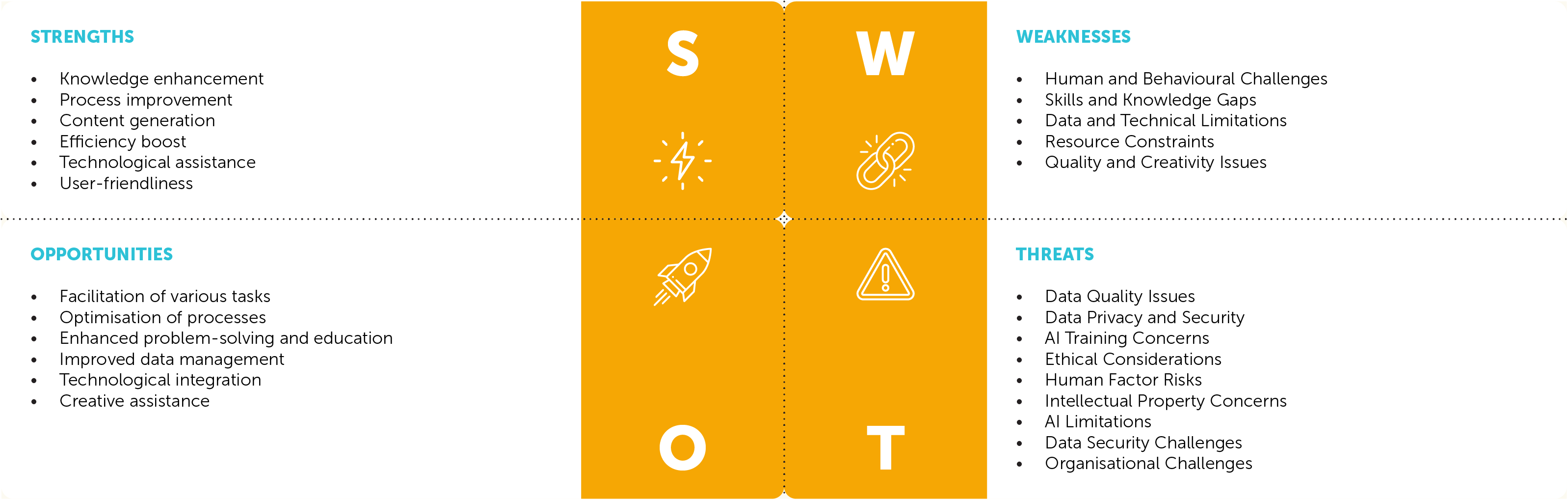
Figure 4: SWOT analysis.
Thus, from this SWOT analysis, the potential MCMC organisational impact (focusing on optimisation efficiency and accuracy of Gen AI and LLMs adoption) has been identified. The SWOT result is further extended to analysis using TOWS (Threats, Opportunities, Weaknesses, Strengths) to assist in the formulation of effective strategies for the feasibility of Gen AI and LLMs adoption to enhance MCMC KM practices. The TOWS analysis is a strategic planning tool that combines internal factors (Strengths and Weaknesses) with external factors (Opportunities and Threats) to develop comprehensive strategies. In this section, we will conclude our TOWS analysis by summarising the key strategies developed for MCMC's AI and LLM adoption in KM practices. By examining these strategies collectively, the research gained a comprehensive understanding of MCMC's strategic position and the recommended actions for successful AI and LLM implementation in KM. This TOWS matrix, as shown in Figure 5, provides a clear overview of the strategies developed to leverage strengths, address weaknesses, capitalise on opportunities, and mitigate threats in MCMC's AI and LLM adoption for KM practices.
%20--%3e%3csvg%20version='1.1'%20id='Layer_1'%20xmlns='http://www.w3.org/2000/svg'%20xmlns:xlink='http://www.w3.org/1999/xlink'%20x='0px'%20y='0px'%20viewBox='0%200%2043%2043'%20style='enable-background:new%200%200%2043%2043;'%20xml:space='preserve'%3e%3cstyle%20type='text/css'%3e%20.st0{fill:%23F5A81D;}%20%3c/style%3e%3cg%3e%3cpath%20class='st0'%20d='M21.5,5.4c-0.5,0-0.9-0.4-0.9-0.9V0.9C20.6,0.4,21,0,21.5,0c0.5,0,0.9,0.4,0.9,0.9v3.6C22.4,5,22,5.4,21.5,5.4%20'/%3e%3cpath%20class='st0'%20d='M33.5,10.4c-0.2,0-0.5-0.1-0.6-0.3c-0.4-0.3-0.4-0.9,0-1.3l2.5-2.5c0.3-0.3,0.9-0.3,1.3,0%20c0.3,0.3,0.3,0.9,0,1.3l-2.5,2.5C34,10.3,33.8,10.4,33.5,10.4'/%3e%3cpath%20class='st0'%20d='M42.1,22.4h-3.6c-0.5,0-0.9-0.4-0.9-0.9c0-0.5,0.4-0.9,0.9-0.9h3.6c0.5,0,0.9,0.4,0.9,0.9%20C43,22,42.6,22.4,42.1,22.4'/%3e%3cpath%20class='st0'%20d='M36.1,37c-0.2,0-0.5-0.1-0.6-0.3l-2.5-2.5c-0.3-0.3-0.3-0.9,0-1.3c0.4-0.3,0.9-0.3,1.3,0l2.5,2.5%20c0.3,0.3,0.3,0.9,0,1.3C36.5,36.9,36.3,37,36.1,37'/%3e%3cpath%20class='st0'%20d='M21.5,43c-0.5,0-0.9-0.4-0.9-0.9v-3.6c0-0.5,0.4-0.9,0.9-0.9c0.5,0,0.9,0.4,0.9,0.9v3.6%20C22.4,42.6,22,43,21.5,43'/%3e%3cpath%20class='st0'%20d='M6.9,37c-0.2,0-0.5-0.1-0.6-0.3c-0.4-0.3-0.4-0.9,0-1.3l2.5-2.5c0.3-0.3,0.9-0.3,1.3,0c0.3,0.3,0.3,0.9,0,1.3%20l-2.5,2.5C7.4,36.9,7.2,37,6.9,37'/%3e%3cpath%20class='st0'%20d='M4.5,22.4H0.9C0.4,22.4,0,22,0,21.5c0-0.5,0.4-0.9,0.9-0.9h3.6c0.5,0,0.9,0.4,0.9,0.9C5.4,22,5,22.4,4.5,22.4'%20/%3e%3cpath%20class='st0'%20d='M9.5,10.4c-0.2,0-0.5-0.1-0.6-0.3L6.3,7.6c-0.3-0.3-0.3-0.9,0-1.3c0.4-0.3,0.9-0.3,1.3,0l2.5,2.5%20c0.4,0.3,0.4,0.9,0,1.3C9.9,10.3,9.7,10.4,9.5,10.4'/%3e%3cpath%20class='st0'%20d='M15.2,21.5h5.4c0.3,0,0.5,0.1,0.7,0.3c0.2,0.2,0.3,0.5,0.2,0.7l-1.1,8.7l7.6-11.5h-5.5c-0.3,0-0.5-0.1-0.7-0.3%20c-0.2-0.2-0.2-0.5-0.2-0.7l1.2-7.1L15.2,21.5z%20M18.9,35.8c-0.1,0-0.2,0-0.3-0.1c-0.4-0.1-0.6-0.5-0.6-1l1.5-11.5h-6.1%20c-0.3,0-0.6-0.2-0.8-0.5c-0.2-0.3-0.1-0.7,0.1-0.9L23.5,7.5c0.2-0.3,0.7-0.5,1.1-0.3c0.4,0.2,0.6,0.6,0.5,1l-1.6,9.7h6.1%20c0.3,0,0.6,0.2,0.8,0.5c0.2,0.3,0.1,0.6,0,0.9L19.7,35.4C19.5,35.7,19.2,35.8,18.9,35.8'/%3e%3c/g%3e%3c/svg%3e) STRENGTHS
STRENGTHS
|
 WEAKNESSES
|
|
|---|---|---|
%20--%3e%3csvg%20version='1.1'%20id='Layer_1'%20xmlns='http://www.w3.org/2000/svg'%20xmlns:xlink='http://www.w3.org/1999/xlink'%20x='0px'%20y='0px'%20viewBox='0%200%2043%2043'%20style='enable-background:new%200%200%2043%2043;'%20xml:space='preserve'%3e%3cstyle%20type='text/css'%3e%20.st0{fill:%23F5A81D;}%20%3c/style%3e%3cg%3e%3cpath%20class='st0'%20d='M14.9,20.9c0.3,0.3,0.3,0.9,0,1.2c-0.3,0.3-0.9,0.3-1.2,0c-0.3-0.3-0.3-0.9,0-1.2C14,20.6,14.5,20.6,14.9,20.9%20'/%3e%3cpath%20class='st0'%20d='M18.8,12.2%20M10.4,21.5l11.1,11.1l13.9-13.9c1.9-1.9,3.5-4.7,4.6-8.2c1.3-4,1.7-7.8,1.8-9.3%20c-1.5,0.1-5.4,0.5-9.3,1.8c-3.5,1.1-6.2,2.7-8.2,4.6l-5,5L10.4,21.5z%20M21.5,34.2c-0.2,0-0.3-0.1-0.4-0.2L9,22%20c-0.1-0.1-0.2-0.3-0.2-0.4c0-0.2,0.1-0.3,0.2-0.4l9.3-9.3l5-5c2.1-2.1,5-3.7,8.7-4.9C37.2,0.1,42.1,0,42.3,0c0.2,0,0.3,0.1,0.5,0.2%20C42.9,0.3,43,0.5,43,0.7c0,0.2-0.1,5.1-1.8,10.4c-1.2,3.7-2.9,6.6-4.9,8.7L21.9,34C21.8,34.1,21.6,34.2,21.5,34.2'/%3e%3cpath%20class='st0'%20d='M16.7,36.6c-0.2,0-0.3-0.1-0.4-0.2l-9.6-9.6c-0.1-0.1-0.2-0.3-0.2-0.5c0-0.2,0.1-0.4,0.3-0.5l4.5-2.7%20c0.3-0.2,0.7-0.1,0.9,0.2c0.2,0.3,0.1,0.7-0.2,0.9l-3.8,2.3l8.4,8.4l2.3-3.8c0.2-0.3,0.6-0.4,0.9-0.2c0.3,0.2,0.4,0.6,0.2,0.9%20l-2.7,4.5C17.1,36.4,16.9,36.5,16.7,36.6C16.7,36.6,16.7,36.6,16.7,36.6'/%3e%3cpath%20class='st0'%20d='M22.7,40.2c-0.1,0-0.1,0-0.2,0c-0.2-0.1-0.4-0.3-0.4-0.5l-0.9-6.3c0-0.3,0.2-0.7,0.5-0.7%20c0.3,0,0.7,0.2,0.7,0.5l0.7,5l6.1-6.1l0.9-7.9c0-0.4,0.4-0.6,0.7-0.6c0.3,0,0.6,0.4,0.6,0.7l-0.9,8.1c0,0.1-0.1,0.3-0.2,0.4%20L23.1,40C23,40.1,22.8,40.2,22.7,40.2'/%3e%3cpath%20class='st0'%20d='M9.8,21.9C9.7,21.9,9.7,21.9,9.8,21.9L3.4,21c-0.2,0-0.4-0.2-0.5-0.4c-0.1-0.2,0-0.5,0.2-0.7l7.2-7.2%20c0.1-0.1,0.2-0.2,0.4-0.2l8.1-0.9c0.4,0,0.7,0.2,0.7,0.6c0,0.3-0.2,0.7-0.6,0.7L11,13.7l-6.1,6.1l5,0.7c0.3,0.1,0.6,0.4,0.5,0.7%20C10.4,21.6,10.1,21.9,9.8,21.9'/%3e%3cpath%20class='st0'%20d='M0.6,43c-0.2,0-0.3-0.1-0.4-0.2c-0.2-0.2-0.2-0.7,0-0.9L9,33.1c0.2-0.2,0.7-0.2,0.9,0c0.2,0.2,0.2,0.7,0,0.9%20l-8.8,8.8C1,42.9,0.8,43,0.6,43'/%3e%3cpath%20class='st0'%20d='M6.6,41.8c-0.2,0-0.3-0.1-0.4-0.2c-0.2-0.2-0.2-0.7,0-0.9l5.2-5.2c0.2-0.2,0.7-0.2,0.9,0%20c0.2,0.2,0.2,0.7,0,0.9l-5.2,5.2C7,41.7,6.8,41.8,6.6,41.8'/%3e%3cpath%20class='st0'%20d='M1.8,37c-0.2,0-0.3-0.1-0.4-0.2c-0.2-0.2-0.2-0.7,0-0.9l5.2-5.2c0.2-0.2,0.7-0.2,0.9,0c0.2,0.2,0.2,0.7,0,0.9%20l-5.2,5.2C2.2,36.9,2,37,1.8,37'/%3e%3cpath%20class='st0'%20d='M30.4,18.6%20M27.4,12c-0.9,0-1.8,0.4-2.5,1.1c-0.7,0.7-1.1,1.6-1.1,2.5s0.4,1.9,1.1,2.5%20c0.7,0.7,1.6,1.1,2.5,1.1c1,0,1.9-0.4,2.5-1.1c1.4-1.4,1.4-3.7,0-5.1C29.2,12.4,28.3,12,27.4,12%20M27.4,20.5c-1.3,0-2.5-0.5-3.4-1.4%20c-0.9-0.9-1.4-2.1-1.4-3.4c0-1.3,0.5-2.5,1.4-3.4c1.9-1.9,5-1.9,6.9,0c1.9,1.9,1.9,5,0,6.9C29.9,20,28.7,20.5,27.4,20.5'/%3e%3cpath%20class='st0'%20d='M40.5,11.4c-0.2,0-0.3-0.1-0.4-0.2l-8.4-8.4c-0.2-0.2-0.2-0.7,0-0.9c0.2-0.2,0.7-0.2,0.9,0l8.4,8.4%20c0.2,0.2,0.2,0.7,0,0.9C40.9,11.4,40.7,11.4,40.5,11.4'/%3e%3cpath%20class='st0'%20d='M23.9,31.8c-0.2,0-0.3-0.1-0.4-0.2l-7.2-7.2c-0.2-0.2-0.2-0.7,0-0.9c0.2-0.2,0.7-0.2,0.9,0l7.2,7.2%20c0.2,0.2,0.2,0.7,0,0.9C24.2,31.7,24,31.8,23.9,31.8'/%3e%3c/g%3e%3c/svg%3e) OPPORTUNITIES
OPPORTUNITIES
|
(S/O)
|
(W/O)
|
%20--%3e%3csvg%20version='1.1'%20id='Layer_1'%20xmlns='http://www.w3.org/2000/svg'%20xmlns:xlink='http://www.w3.org/1999/xlink'%20x='0px'%20y='0px'%20viewBox='0%200%2043%2043'%20style='enable-background:new%200%200%2043%2043;'%20xml:space='preserve'%3e%3cstyle%20type='text/css'%3e%20.st0{fill:%23F5A81D;}%20%3c/style%3e%3cg%3e%3cpath%20class='st0'%20d='M20.1,6.2c0.6-1.1,2.2-1.1,2.8,0l16.5,28.9c0.6,1.1-0.2,2.4-1.4,2.4H5c-1.2,0-2-1.3-1.4-2.4L20.1,6.2z%20M21.7,6.9c-0.1-0.2-0.3-0.2-0.4,0L4.8,35.9c-0.1,0.2,0,0.4,0.2,0.4h33c0.2,0,0.3-0.2,0.2-0.4L21.7,6.9z%20M24.7,5.2%20c-1.4-2.5-4.9-2.5-6.3,0L1.9,34.2c-1.4,2.4,0.4,5.5,3.2,5.5h33c2.8,0,4.6-3,3.2-5.5L24.7,5.2z%20M17.1,4.5c1.9-3.4,6.8-3.4,8.7,0%20l16.5,28.9c1.9,3.3-0.5,7.5-4.4,7.5H5c-3.9,0-6.3-4.2-4.4-7.5L17.1,4.5z'/%3e%3cpath%20class='st0'%20d='M18.8,31.8c0-1.5,1.2-2.7,2.7-2.7c1.5,0,2.7,1.2,2.7,2.7c0,1.5-1.2,2.7-2.7,2.7C20,34.5,18.8,33.3,18.8,31.8%20M21.5,30.4c-0.8,0-1.4,0.6-1.4,1.4s0.6,1.4,1.4,1.4c0.8,0,1.4-0.6,1.4-1.4S22.3,30.4,21.5,30.4'/%3e%3cpath%20class='st0'%20d='M21.5,15.3c-0.8,0-1.4,0.6-1.4,1.4v8.9c0,0.8,0.6,1.4,1.4,1.4c0.8,0,1.4-0.6,1.4-1.4v-8.9%20C22.9,16,22.3,15.3,21.5,15.3%20M18.8,16.7c0-1.5,1.2-2.7,2.7-2.7s2.7,1.2,2.7,2.7v8.9c0,1.5-1.2,2.7-2.7,2.7s-2.7-1.2-2.7-2.7V16.7z%20'/%3e%3c/g%3e%3c/svg%3e) THREATS
THREATS
|
(S/T)
|
(W/T)
|
Figure 5: TOWS analysis by summarising the key strategies developed for MCMC's AI and LLMs adoption in KM practices.
Phase IV: KMAI Framework Development
The expert evaluation consists of three AI and KM experts in public, private, and academic fields in Malaysia. The feedback from the experts showcased a consensus of agreement on the proposed recommendations of KM and AI framework. They agree that the KMAI framework can create a holistic approach to KM through AI integration. By focusing on training and user experience, MCMC can foster a workforce that is not only skilled but also confident in leveraging AI technologies. The emphasis on continuous improvement ensures that AI tools evolve alongside organisational needs, maintaining their relevance and effectiveness. Moreover, the framework's recommendations highlight the importance of a supportive culture and robust infrastructure. By aligning AI initiatives with organisational goals and fostering collaboration, MCMC can enhance its KM practices, ultimately leading to more informed decision-making and a more innovative environment.
By leveraging Gen AI and LLMs, KM can facilitate real-time knowledge retrieval, automate content generation, and enhance insights from large datasets. This integration aims to improve knowledge accessibility, foster collaboration, and support decision-making, allowing organisations to better harness their collective knowledge and drive continuous learning and innovation. Figure 6 outlines a comprehensive framework for the adoption of Gen AI and LLMs within the context of KM practices at the MCMC. It emphasises several key components:
i.
People:
This section highlights the importance of knowledge and awareness, AI learning, professional growth, and human-AI interaction. It underscores the need for continuous improvement and efficiency in organisational processes.
ii.
Process:
This involves the integration and optimisation of AI technologies, focusing on development, customisation, and resource management. It also addresses the significance of quality assurance and best practices in process management.
iii.
Technology:
The framework includes an AI governance and ethical framework, which is crucial for ensuring responsible AI use. It also covers aspects like infrastructure, security, and user experience.
iv.
Content and Data:
This part focuses on content management, knowledge acquisition, and data management, including analytics and security. It highlights the importance of data literacy and access in leveraging AI effectively.
v.
Culture:
A culture of continuous learning and ethical responsibility is emphasised, promoting organisational integration and development in the context of AI.
Overall, the KMAI framework presents a holistic approach to AI adoption, integrating people, processes, technology, culture, and data management to enhance organisational capabilities and foster innovation.
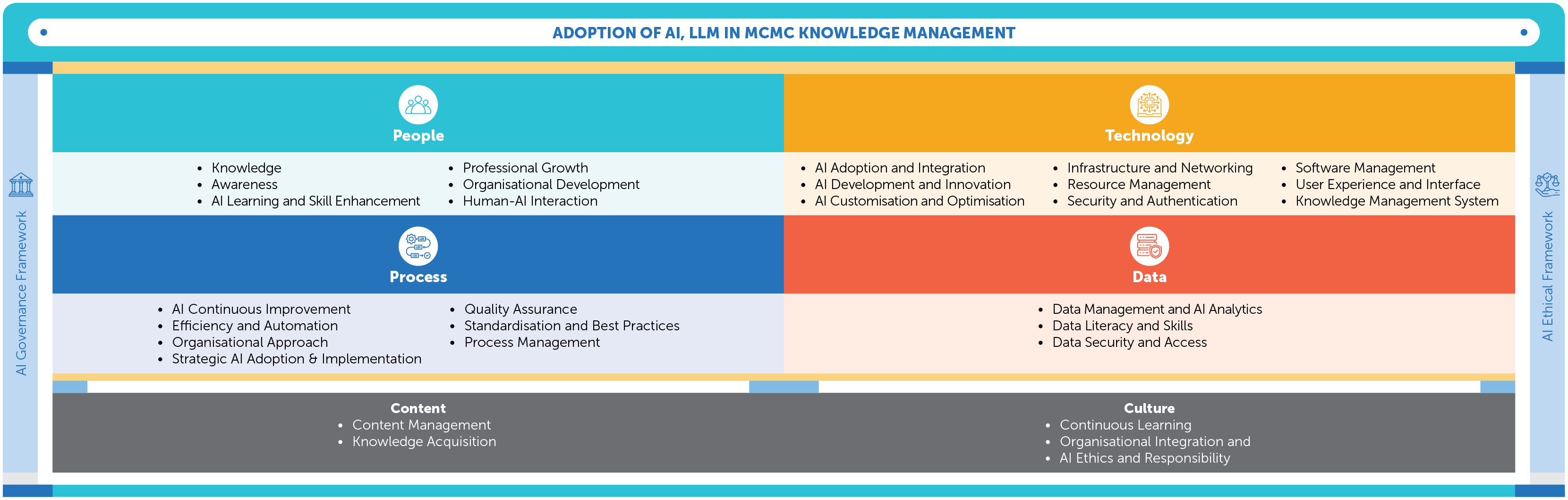
Figure 6: Evaluated Proposed KMAI Framework for MCMC.
Conclusion
This study examined the issues and challenges hindering the implementation of Generative AI and Large Language Models (LLMs) to enhance MCMC's KM practices. While the results showed positive outcomes from these initiatives, the analysis evaluated their potential organisational impact through a SWOT framework, particularly focusing on optimisation, efficiency, and accuracy. Based on the findings of the level of adoption in MCMC, it is recommended that MCMC move towards an AI-accelerated pace rather than an AI-steady approach for implementing Gen AI and LLMs in KM. According to Gartner (2024), AI-accelerated organisations differ from traditional ones by embedding AI technologies into core operations and decision-making. These organisations use AI to boost productivity, enhance creativity, and increase employee engagement, transforming their operational and strategic approaches. In contrast, an AI-steady pace represents a maturation phase where companies move beyond initial testing and pilots. This stable phase typically features operational integration, scalability, governance and ethics, improved ROI, sophisticated data management, workforce adaptation, explainability, and continuous improvement, marking AI's evolution from an experimental tool to a core business capability.
Based on the findings, MCMC aligns with the AI-accelerated approach by integrating Gen AI and LLMs to achieve comprehensive business outcomes that go beyond individual productivity gains. This strategy aims to unlock broader benefits, including new revenue streams, reduced losses, better customer experiences, and improved sustainability. This approach particularly suits industries undergoing rapid AI-driven changes or organisations with ambitious AI goals. Companies following an AI-accelerated pace can harness AI for transformative change, driving innovation and maintaining competitive advantage.
A comprehensive framework is proposed to guide the integration of Gen AI and LLMs into KM practices at MCMC. This framework aims to improve data management by providing methods for efficient knowledge utilisation, organisation, and extraction. Moving forward, MCMC needs to develop an integrated technology roadmap with detailed three - to five - year plans, outlining AI adoption timelines and core capabilities for enhancement. This planning will ensure sustainable implementation.
References
Barbon Junior, S., Ceravolo, P., Groppe, S., Jarrar, M., Maghool, S., Sèdes, F., ... & Van Keulen, M. (2024, June).
Are Large Language Models the New Interface for Data Pipelines?. In Proceedings of the International Workshop on Big Data in Emergent Distributed Environments (pp. 1-6).
Euchner, J. (2023).
Generative AI. Research-Technology Management, 66(3), 71–74.
Fteimi, N., & Hopf, K. (2021).
Knowledge Management in the Era of Artificial Intelligence: Developing an Integrative Framework.
Gamieldien, Y. (2023).
Innovating the Study of Self-Regulated Learning: An Exploration through NLP, Generative AI, and LLMs.
Gartner, (2024).
Gartner Identifies Four Emerging Challenges to Delivering Value from AI Safely and at Scale, https://www.gartner.com/en/newsroom/press-releases/2024-10-21-gartner-identifies-four-emergingchallenges-to-delivering-value-from-ai-safely-and-at-scale
Gharaibeh, M., Gharaibeh, N., Venter De Villiers, M., Khlaif Gharaibeh, M., Khlaif Gharaibeh, N., & De Villiers, M. V. (2020).
A Qualitative Method to Explain Acceptance of Mobile Health Application: Using Innovation Diffusion Theory. Article in International Journal of Advanced Science and Technology, 29(4), 3426–3432. https://www.researchgate.net/publication/342447298
Ghimire, A. (2024).
DigitalCommons @ USU Generative AI in Education from the Perspective of Students, Educators, and Administrators
Imran, M., Shahid, A. R., Hou, M., & Imteaj, A. (2024).
From Early Adoption to Ethical Adoption: A Diffusion of Innovation Perspective on ChatGPT and Large Language Models in the Classroom. 1–12. https://doi.org/10.36227/techrxiv.170630660.06963201/v1
Jeong, M., Sohn, J., Sung, M., & Kang, J. (2024).
Improving medical reasoning through retrieval and self-reflection with retrieval-augmented large language models. Bioinformatics, 40(Supplement_1), i119-i129.
Kaczorowska-Spychalska, D., Kotula, N., Mazurek, G., & Sułkowski, Ł. (2024).
Generative AI as source of change of knowledge management paradigm. Human Technology, 20(1), 131-154.
KM Insider. (2024, July 1).
The role of AI in knowledge management: Evidence from recent research. KM Insider. https://kminsider.com/blog/role-of-ai-in-knowledge-management/
Ligot, D. V. (2024).
AI Governance: A Framework for Responsible AI Development. Available at SSRN 4817726
Lokman, A. M., Kadir, S. A., Noordin, F., & Shariff, S. H. (2018).
Modeling factors and importance of happiness using KJ method. In Proceedings of the 7th International Conference on Kansei Engineering and Emotion Research 2018: KEER 2018, 19-22 March 2018, Kuching, Sarawak, Malaysia (pp. 870-877). Springer Singapore.
Lund, B. D., Omame, I., Tijani, S., & Agbaji, D. (2020).
Perceptions toward artificial intelligence among academic library employees and alignment with the diffusion of innovations' adopter categories. College and Research Libraries, 81(5), 865–882. https://doi.org/10.5860/crl.81.5.865
Maione, G., & Leoni, G. (2021).
Artificial intelligence and the public sector: the case of accounting. In Artificial Intelligence and Its Contexts: Security, Business and Governance (pp. 131–143). Springer.
Makowsky, M. J., Guirguis, L. M., Hughes, C. A., Sadowski, C. A., & Yuksel, N. (2013).
Factors influencing pharmacists' adoption of prescribing: Qualitative application of the diffusion of innovations theory. Implementation Science, 8(1), 1–11. https://doi.org/10.1186/1748-5908-8-109
Microsoft (2024).
Microsoft AI Solutions: Transforming Knowledge Management with Azure Cognitive Services. [Microsoft](https://azure.microsoft.com/en-us/services/cognitive-services/)
Novalin, A., Gunawan, A., & Prihandoko, D. (2024).
The Implementation of Artificial Intelligence in Knowledge Management: A Systematic Literature Review. 2024 IEEE International Conference on Interdisciplinary Approaches in Technology and Management for Social Innovation, IATMSI 2024. https://doi.org/10.1109/IATMSI60426.2024.10502986
Rogers, E.M., Diffusion of innovations. (2010)
Simon and Schuster.
Sahin, I., & Rogers, F. (2006).
Detailed Review of Rogers' Diffusion of Innovations Theory and Educational Technology-Related Studies Based on Rogers'. 5(2), 14–23.
Sharma, R., Lakhera, G., & Sharma, M. (2023).
Artificial intelligence in KM processes: Emerging trends and challenges. In 2023 1st DMIHER International Conference on Artificial Intelligence in Education and Industry 4.0 (IDICAIEI) (pp. 1-6) IEEE. https://doi.org/10.1109/IDICAIEI58380.2023.10406876
Siemens (2024)
Siemens AI in Manufacturing: Enhancing Production with Predictive Analytics. [Siemens](https://www.siemens.com/global/en/home.html)
Sharon Alita, GovTech Singapore, (2024)
Leveraging AI to Improve Public Services. https://opengovasia.com/author/alita-sharon/
Softbank (2024)
SoftBank AI Customer Service: Revolutionizing Customer Interaction with AI. [SoftBank](https://www.softbank.jp/en/)
Xue, Q. (2022).
Practical Application of Artificial Intelligence and Big Data in the Field of Human Resource Management. 2022, 3rd International Conference on Education, Knowledge and Information Management (ICEKIM), 243-247. https://doi.org/10.1109/ICEKIM55072.2022.00061
Yu, P., Xu, H., Hu, X., & Deng, C. (2023, October).
Leveraging generative AI and large Language models: a Comprehensive Roadmap for Healthcare Integration. In Healthcare (Vol. 11, No. 20, p. 2776). MDPI.
Zhu, J. J., Jiang, J., Yang, M., & Ren, Z. J. (2023).
ChatGPT and environmental research. Environmental Science & Technology, 57(46), 17667-17670.