
TOPIC
03
Beyond the Horizon: An Empirical Investigation into Metaverse TVET Adoption for Communications and Multimedia Capacity Development in Malaysian HEIs
LEAD RESEARCHER
Assoc. Prof. Dr. Keoy Kay Hooi
UCSI UNIVERSITY
TEAM MEMBERS
Distinguished Prof. Dr. Ooi Keng Boon
UCSI UNIVERSITY
Assoc. Prof. Dr. Eugene Aw
UCSI UNIVERSITY
Asst. Prof. Dr. Lim Ai Fen
UCSI UNIVERSITY
Senior Prof. Dr. Garry Tan
UCSI UNIVERSITY
Asst. Prof Dr. Eva Lim
UCSI UNIVERSITY
Prof. Dr. Cham Tat Huei
UCSI UNIVERSITY
Asst. Prof. Dr. Chaw Lee Yen
UCSI UNIVERSITY
Abstract
This study explores the readiness of Malaysian Higher Educational Institutions (HEIs) to integrate Metaverse technologies into Technical and Vocational Education and Training (TVET) curricula, addressing a significant gap in global research on virtual reality (VR) adoption in education. The research is motivated by Malaysia's strategic emphasis on fostering a skilled and adaptable workforce, as outlined in the 12th Malaysia Plan (12MP) and the Job Creation Strategic Plan 2021–2023. While these initiatives underscore the need for industry-aligned skills and innovative educational methods, the potential of Metaverse technologies in achieving these goals remains underexplored within the Malaysian context. This study adopts a mixed method to analyse the established frameworks. Using the Technology Acceptance Model (TAM), Theory of Planned Behaviour (TPB), and Trust Theory, hypotheses were developed and tested to identify factors influencing the acceptance and adoption of Metaverse technologies in Malaysian HEIs. Data were collected through structured surveys distributed to educators, administrators, and industry partners involved in TVET, with subsequent statistical analysis revealing key trends. Findings indicate moderate readiness among Malaysian HEIs, with significant variations in perceived ease of use, trust in technology, and institutional support for Metaverse integration. While respondents acknowledged the potential of the Metaverse to enhance engagement and skills acquisition, challenges such as inadequate infrastructure, limited digital literacy, and financial constraints were prominent barriers. Additionally, the findings highlight a disconnect between current TVET offerings and the demands of a rapidly evolving digital economy. The study concludes the adoption of Metaverse technologies in Malaysian TVET, emphasising infrastructure development, stakeholder collaboration, and targeted training programmes. By addressing these challenges, Malaysian HEIs can better align with national aspirations for a digitally empowered workforce, contributing to the global discourse on educational technology adoption. Future research should incorporate longitudinal and qualitative approaches to capture evolving trends and broader contexts.
Keywords: Technical and Vocational Education and Training (TVET), Malaysian Higher Educational Institutions (HEIs), Metaverse, Technology Acceptance Model (TAM), Theory of Planned Behaviour (TPB), Trust Theory
Problem Statement
The rise of Metaverse TVET (Technical and Vocational Education and Training) in Malaysia represents a significant shift in the education sector, offering new possibilities for enhancing learning experiences. However, there is a lack of research on how prepared Malaysian Higher Educational Institutions (HEIs) are to adopt this innovative approach. This gap in scholarly work limits our understanding of the challenges and hinders the development of effective strategies for integrating Metaverse TVET into the education system.
To address this, a systematic study is essential to assess the readiness of Malaysian HEIs, leading to the creation of a research framework that provides valuable academic insights. This research will aid stakeholders in making informed decisions and shaping the future of education in Malaysia.
This study aims to comprehensively explain the challenges and opportunities in integrating Metaverse TVET into Malaysian higher education by examining critical factors such as infrastructure, faculty training, and curriculum adaptation. The findings will provide actionable insights for academic leaders, policymakers, and industry stakeholders, contributing to the development of a technologically skilled and future-ready workforce in Malaysia.
Research Objectives
To investigate the current state of TVET Metaverse curricula adoption among HEIs.
To identify the challenges that institutions face in developing the TVET Metaverse curricula.
To identify motivations to adopt and implement TVET Metaverse curricula among HEIs.
To identify specific TVET courses that need to be developed leveraging the capabilities of the metaverse (including VR/AR technologies) to enhance technical and vocational education, foster skills acquisition, and prepare learners for emerging job roles and industries.
To propose a TVET Metaverse conceptual framework for the capacity development programmes for C&M technological, organisational, and people-related aspects.
To investigate the demand for TVET courses among NADI Community (Focus Group for Nadi Group – i.e. Selangor.
Literature Review
TVET Education and IR 4.0
In the wave of Industry 4.0, Technical and Vocational Education and Training (TVET) has become a bridge connecting traditional skills with the demands of future technology (M. Yusop et al., 2023). TVET education is facing unprecedented opportunities and challenges (García-Morales et al., 2021). Industry 4.0, characterised by digital transformation, automation technology, artificial intelligence, Internet of Things (IoT), big data analysis, and cloud computing, is fundamentally changing manufacturing (Morgan et al., 2021) and service industries (Sony et al., 2021). This change not only affects production efficiency (Ghobakhloo, 2020) but also profoundly impacts skill demand in the labour market (Saniuk et al., 2023).
TVET and Metaverse Development in Malaysian Higher Education Institutions (HEIs)
With the increasing maturity of metaverse technology, TVET education is undergoing significant transformation. The metaverse provides an innovative method for teaching and learning, effectively addressing the limitations of traditional vocational education platforms. Through the metaverse, students can engage in interactive learning within a virtual environment, achieving a more immersive training experience. This technology enables practical operations in a secure virtual space, especially suitable for high-risk or high-cost professional training. Additionally, the metaverse promotes the global sharing and exchange of educational resources, presenting broader development opportunities for TVET education. To some extent, the metaverse will bridge the challenges faced by TVET education in Malaysia.
Research Framework and Hypotheses
Technology Elements
The Metaverse offers significant advantages over existing technologies and alternative solutions, such as higher interactivity and more realistic immersive experiences (Gokasar et al., 2023; Shamim et al., 2024). These features directly enhance users' evaluation of perceived usefulness (Kim et al., 2024). Compatibility with users' existing needs and working methods further strengthens this positive evaluation (Shirowzhan et al., 2020; Islam, 2016). Additionally, technologies with lower complexity are easier for users to understand and use (Toufaily et al., 2021), further enhancing perceived usefulness. Therefore, it can be inferred that technological factors significantly positively impact perceived usefulness.
High compatibility technology allows users to adopt new technologies easily without significantly adjusting their behavior (Chatterjee et al., 2021; Venkatesh et al., 2012), greatly improving perceived ease of use. Technologies with lower complexity reduce users' psychological burden through intuitive interface design and simple operation steps (Dang et al., 2020). Simplifying operational processes and reducing learning costs also improve perceived ease of use (Liu et al., 2019). Therefore, it can be concluded that technological factors positively promote perceived usability.
Hypotheses related to technology factors
•H1a: Technological factors will have a positive impact on perceived usefulness.
•H1b: Technological factors will have a positive impact on perceived ease of use.
Organisational Elements
Top Management Support
Top management support provides the necessary resources, policies, and strategic direction for introducing new technologies (Boonstra, 2013). This support brings clear goals and confidence to employees (Men et al., 2020). For example, active support from top management can significantly increase perceived usefulness within an organisation (Gangwar et al., 2015). Additionally, high levels of technological readiness in organisations lead users to recognise the value of technology in improving efficiency, optimising business processes, and increasing perceived usefulness (Chang & Chen, 2021).
Organisational Readiness
Improving organisational readiness provides a comprehensive infrastructure and support system for technology implementation (Uren & Edwards, 2023). When organisational technology and human resources are adequately prepared, users find it more convenient and efficient to use technology (Hradecky et al., 2022). Organisational readiness ensures that the necessary resources and support systems are in place, making it easier for users to adopt new technologies.
Hypotheses related to organisational factors
•H2a: Organisational factors will have a positive impact on perceived usefulness.
•H2b: Organisational factors will have a positive impact on perceived ease of use.
Environmental Elements
Competitive Pressure
Competitive pressure forces organisations to constantly innovate to maintain market competitiveness (Singh et al., 2021). Kwon et al. (2021) found that external competitive pressure can drive companies to adopt new technologies and increase their perceived usefulness. Furthermore, competitive pressure prompts organisations to quickly adopt and implement new technologies, improving employees' evaluation of perceived ease of use (Kwon et al., 2021).
External Support
External support can increase the feasibility and application value of technology (Umstead et al., 2021). This includes training and technical support services from technology suppliers, which can effectively enhance users' perceived ease of use (Maroufkhani et al., 2020). The presence of external support significantly reduces uncertainty and complexity, improving users' confidence and usability awareness (Gumusluoğlu & Ilsev, 2009).
Government Regulation
Government regulatory policies and incentive measures, such as tax incentives and innovation subsidies, can accelerate technology promotion and enhance enterprises' awareness of its usefulness (Wang et al., 2021). Government regulation, through normative and supportive policies, can help enterprises implement and use technology more smoothly, reducing obstacles to technology adoption and further enhancing its usability (Brandao et al., 2020; Ali et al., 2020).
Government Regulation
Government regulatory policies and incentive measures, such as tax incentives and innovation subsidies, can accelerate technology promotion and enhance enterprises' awareness of its usefulness (Wang et al., 2021). Government regulation, through normative and supportive policies, can help enterprises implement and use technology more smoothly, reducing obstacles to technology adoption and further enhancing its usability (Brandao et al., 2020; Ali et al., 2020).
Hypotheses related to Environmental Elements
•H3a: Environmental factors will have a positive impact on perceived usefulness.
•H3b: Environmental factors will have a positive impact on perceived ease of use.
Perceived Ease of Use Impact on Perceived Usefulness and Hypothesis
Perceived ease of use refers to the user's perception of how user-friendly and effortless a technology is to use (Chaw et al., 2024). Technologies that require minimal effort are often considered more useful (Liu et al., 2019). Kwok et al. (2020) found that perceived ease of use positively impacts perceived usefulness among users using virtual reality for crisis management training. Similarly, Nyazabe et al. (2023) demonstrated that perceived ease of use positively influenced the usefulness of an educational-based Blockchain system in higher education institutions in DR Congo. Based on this evidence, we propose the following hypothesis:
•H4: Perceived ease of use will have a positive impact on perceived usefulness.
Perceived Usefulness Impact on Trust and Intention to Use and Hypotheses
Perceived usefulness refers to an individual's perception of how a system can improve their job performance (Wang et al., 2024; Venkatesh et al., 2023). In the context of this study, the more management and educators of HEIs perceive the metaverse TVET to be useful, the more likely they are to trust that metaverse TVET will improve learning. Perceived usefulness has been proven to positively influence adoption intention in many studies (Ali et al., 2024; Natasia et al., 2022; Wang et al., 2024). Industry 5.0 has brought about a significant shift in how technology is used and integrated into business functions, and its influence in the years to come cannot be underestimated (Pal & Arpnikanondt, 2021). Therefore, we foresee that metaverse TVET courses will soon be accepted into the education system. Thus, the following hypotheses are proposed:
•H5a: Perceived usefulness will have a positive impact on trust in technology.
•H5b: Perceived usefulness will have a positive impact on the intention to use.
Perceived Ease of Use Impact on Trust and Intention to Use and Hypotheses
Hansen et al. (2018) showed that when users perceive a technology to be easy to use, they are more likely to believe that the technology can bring them value and reduce errors and uncertainty during use. Davis (1989) pointed out in his Technology Acceptance Model (TAM) that perceived ease of use directly affects users' trust in technology. Users do not have to worry about the complexity of technology operations and can rely more on it. Perceived ease of use increases users' confidence, reduces frustration, and enhances trust in technology (Lee & Coughlin, 2015). Therefore, perceived ease of use has a significant positive impact on technology trust. Venkatesh & Davis (2000) found that the ease of use of technology is one of the key factors influencing intention to use. If users believe that the technical operation is simple and does not require much effort or time to learn and adapt, they will be more inclined to use the technology (Mohammadi, 2015). Perceived ease of use reduces uncertainty and distress during use, allowing users to be more relaxed and proactive when facing new technology (Abdullah et al., 2016), thereby enhancing their adoption intentions. Conversely, if technology is considered complex and difficult to operate, users' intention to use it will significantly decrease (Kasilingam, 2020). Therefore, perceived ease of use has a positive effect on usage intention. Thus, the following hypotheses are proposed:
•H6a: Perceived ease of use will have a positive impact on trust in technology.
•H6b: Perceived ease of use will have a positive impact on the intention to use.
Trust in Technology and Impact on Intention to Use and Hypothesis
Kabra et al. (2017) showed that when users have a high level of trust in technology, they are more likely to form positive usage intentions and ultimately decide to adopt the technology. Additionally, Harrison McKnight et al. (2002) found that users' trust in technology can reduce the risks and uncertainties they may encounter during use and enhance their willingness to use technology. The establishment of trust can stem from factors such as the reliability of technology, privacy protection measures, and the reputation of technology providers (Jiang et al., 2022). Choung et al. (2023) also support the idea that when users have a high level of trust in technology, their intention to use it will significantly increase. Therefore, trust in technology has a positive impact on the intention to use it.
•H7: Trust in technology will have a positive impact on the intention to use.
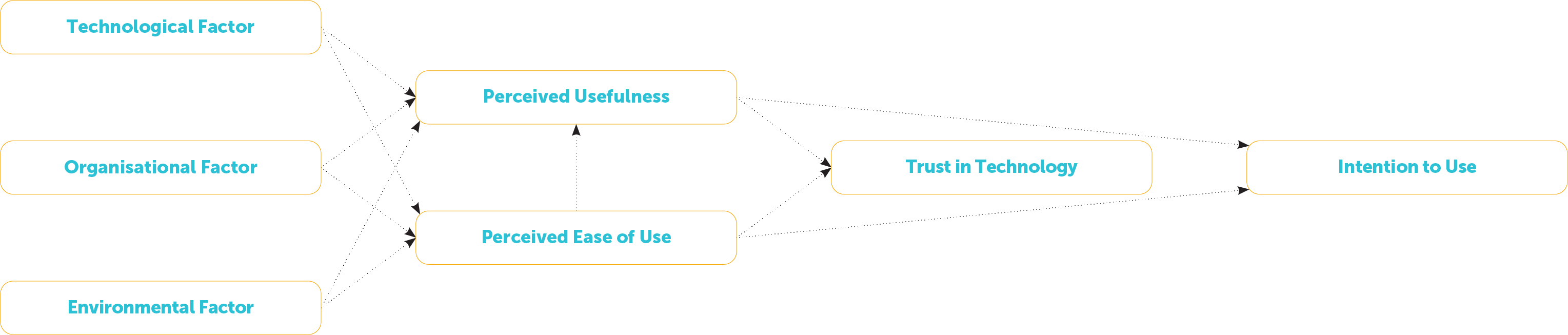
Diagram 1: Inter-relationship between Observed Variables.
Methodology
This research targets higher educational institutions (HEIs) in Malaysia, where metaverse adoption and the popularity of TVET courses remain low. Descriptive survey research will be adopted to gather data and information about the acceptance and adoption of the metaverse in TVET in Malaysia. This approach will help identify the challenges faced by Malaysian HEIs in providing quality metaverse integration in TVET (Salaria, 2012). Additionally, descriptive research can analyse and describe theoretical information regarding the status of metaverse adoption in TVET courses in Malaysia (Siedlecki, 2020).
Exploratory research will be used to gain insight into research questions and explore the main challenges regarding metaverse adoption in TVET courses. This method provides a better understanding of new topics with limited existing research (Swedberg, 2020). The theoretical framework developed through exploratory research will explain the challenges faced by institutions when integrating the metaverse into TVET courses. Combining these two research methods will better investigate the status of metaverse adoption in TVET courses in Malaysia.
A cross-sectional study is designed for this research to investigate the objectives at a single point in time. A mixed-method approach, integrating both quantitative and qualitative data, will be employed. This approach is advantageous for collecting rich and comprehensive data. For example, the perception of micro-credentials often integrates quantitative data (e.g., scores determining prevalence) with qualitative data (e.g., emotions and expressions) (Wisdom & Creswell, 2013).
For the quantitative study, a survey questionnaire will be adopted, while the qualitative study will involve interviews within focus groups. The main reason for using a mixed-method approach is to explore different perspectives and uncover relationships related to the research questions (Shorten & Smith, 2017). The quantitative data will help analyse the demand for micro-credentials in the Communication & Multimedia (C&M) fields. Additionally, the qualitative study will provide opportunities for participants to reflect on and share their experiences and feelings about micro-credentials in these fields. This method helps explain quantitative data with enriched evidence, enabling deeper answers to the research questions (Shorten & Smith, 2017).
Findings and Analysis
Reliability and Validity Test
According to Fornell and Larcker (1981), the outer loadings value must be greater than 0.7. Table I shows that all outer loadings exceed 0.7, indicating that all constructs have high convergence validity. In addition, Cronbach (1951) proposed that Cronbach's Alpha value exceeding 0.7 is considered to have good internal consistency reliability. All constructs had Cronbach's Alpha values above 0.7, indicating ideal internal consistency reliability of the model. Jöreskog (1971) pointed out that Composite Reliability needs to be greater than 0.7 to ensure reliability. the composite reliability of all constructs in this study exceeded 0.7, indicating good construct reliability. Fornell and Larcker (1981) also proposed that the average variance extraction (AVE) should exceed 0.5 to achieve convergence validity. In this study, the AVE of each construct was greater than 0.5, further verifying the convergence validity of the model.
Measurement Model Assessment
| Constructs | Items | Loadings | AVE | Cronbach's Alpha | CR (rho_a) | CR (rho_c) |
|---|---|---|---|---|---|---|
| TF (Technological Factors) | TF1 | 0.776 | 0.628 | 0.946 | 0.948 | 0.628 |
| TF2 | 0.802 | |||||
| TF3 | 0.792 | |||||
| TF4 | 0.771 | |||||
| TF5 | 0.796 | |||||
| TF6 | 0.784 | |||||
| TF7 | 0.772 | |||||
| TF8 | 0.777 | |||||
| TF9 | 0.79 | |||||
| TF10 | 0.827 | |||||
| TF11 | 0.827 | |||||
| TF12 | 0.788 | |||||
| EF (Environmental Factors) | EF1 | 0.8 | 0.628 | 0.926 | 0.927 | 0.628 |
| EF2 | 0.793 | |||||
| EF3 | 0.777 | |||||
| EF4 | 0.795 | |||||
| EF5 | 0.8 | |||||
| EF6 | 0.819 | |||||
| EF7 | 0.791 | |||||
| EF8 | 0.796 | |||||
| EF9 | 0.759 | |||||
| OF (Organisational Factors) | OF1 | 0.776 | 0.591 | 0.901 | 0.903 | 0.591 |
| OF2 | 0.741 | |||||
| OF3 | 0.764 | |||||
| OF4 | 0.718 | |||||
| OF5 | 0.79 | |||||
| OF6 | 0.772 | |||||
| OF7 | 0.8 | |||||
| OF8 | 0.784 | |||||
| PE (Perceived Usefulness) | PE1 | 0.811 | 0.696 | 0.854 | 0.859 | 0.696 |
| PE2 | 0.859 | |||||
| PE3 | 0.864 | |||||
| PE4 | 0.801 | |||||
| PU (Perceived Ease of Use) | PU1 | 0.856 | 0.881 | 0.882 | 0.737 | |
| PU2 | 0.88 | |||||
| PU3 | 0.862 | |||||
| PU4 | 0.837 | |||||
| TT (Trust in Technology) | TT1 | 0.833 | 0.7 | 0.857 | 0.861 | 0.7 |
| TT2 | 0.854 | |||||
| TT3 | 0.843 | |||||
| TT4 | 0.816 | |||||
| IU (Intention to Use) | IU1 | 0.846 | 0.714 | 0.8 | 0.808 | 0.714 |
| IU2 | 0.876 | |||||
| IU3 | 0.813 |
Table 1: Measurement Model Assessment
According to the Heterogeneity to Homogeneity Ratio (HTMT) standard proposed by Henseler et al. (2015), the HTMT value should be below 0.85 (or below 0.90 under stricter standards) to ensure good discriminant validity between constructs. The HTMT values shown in Table 2 did not exceed 0.85, indicating good discriminant validity between each construct and meeting the criteria for HTMT discriminant validity. Therefore, the constructs can be clearly distinguished, and the discriminant validity is supported.
| EF | IU | OF | PE | PU | TF | TT | |
|---|---|---|---|---|---|---|---|
| EF | |||||||
| IU | 0.519 | ||||||
| OF | 0.452 | 0.449 | |||||
| PE | 0.636 | 0.621 | 0.501 | ||||
| PU | 0.406 | 0.49 | 0.586 | 0.602 | |||
| TF | 0.355 | 0.425 | 0.604 | 0.459 | 0.501 | ||
| TT | 0.393 | 0.555 | 0.431 | 0.618 | 0.507 | 0.371 |
Key: EF - Environment Factors | IU - Intention to Use | OF - Organisational Factors | PE - Perceived Ease of Use | U - Perceives Usefulness | TF - Technological Factors | TT - Trust in Technology
Table 2: HTMT Values
Result Discussions
As shown in Table 3, the results of the hypothesis testing are displayed.
TF on PE (β=0.178, p<0.05). TF has a significant positive impact on PE. The hypothesis H1a was supported. This indicates that as the technological conditions of the Metaverse become more mature, the convenience and operability of use become higher, and users will find it easier to use. The finding is consistent with past studies. For example, Venkatesh and Bala (2008) emphasised in the Extended Technology Acceptance Model (TAM3) that technical factors such as system output quality and feature richness can enhance users' perceived ease of use. TF on PU (β=0.162, p<0.05). This shows that TF has a significant positive impact on PU. The hypothesis H1b was supported. This means that the more powerful the functionality of the metaverse, the more practical it will be for users to find it helpful in their work or life. The results are consistent with earlier research. Pavlou (2003) suggests that in e-commerce and other digital technology environments, the stability of technology and the completeness of functionality can significantly enhance users' perceived usefulness. OF on PE(β=0.165, p<0.05). This reveals that OF has a significant positive impact on PE. The hypothesis H2a was supported. This means that as the organisational structure of a company becomes more supportive of the adoption of metaverse, such as providing sufficient resources and employee training, users will find metaverse technology easier to use. The finding is in line with Wixom and Todd (2005), who suggest that Organisations' efforts in providing training, technical support, and resource allocation can significantly enhance users' awareness of the ease of use of technology. OF on PU (β=0.286, p<0.05). OF has a significant positive impact on PU. The hypothesis H2b was supported. he results is consistent with Igbaria et al. (1997), who proposed that Organisational support, such as encouragement from management, training, and resource provision, can enhance users' understanding of technology and make them aware of its role in improving work efficiency and performance. EF on PE(β=0.44, p<0.01). EF has a great impact on PE. The hypothesis H3a was supported. The result is consistent with past studies. For example, Tornatzky and Fleischer (1990) proposed that external environmental factors, such as government policies, industry norms, and market pressures, can affect the acceptance of technology within an organisation and users' perception of usability. EF on PU(β=0.01, p>0.1). This result indicates that EF has no statically significant impact on PU. The hypothesis H3b was rejected. This may be because although EF can drive technology adoption, they are not sufficient to directly enhance users' perception of the actual utility of technology. The PU depends more on the actual performance of the technology itself in work tasks and the support within the organisation, rather than the direct impact of external environments. Zhu et al. (2006) pointed out that although environmental factors such as competitive pressure and market demand can effectively promote the adoption of new technologies by enterprises, they usually do not directly affect users' subjective perception of technology usage experience or operational convenience.
PE on PU(β=0.322, p<0.01). PE has a significant impact on PU. The hypothesis H4 was rejected. The finding is in line with past studies. Gefen and Straub (2000) also support this view, especially in e-commerce and information systems, where the ease of use of technology can make it easier for users to access information or complete transactions, making them more convinced of the practicality of technology. PE on IT(β=0.413, p<0.01). PE has a significant impact on TT. The hypothesis H5a was supported. The result is in line with Gefen et al. (2023)'s suggestions that when users feel that technology is easy to use, they are more likely to develop a sense of trust in it because ease of use can reduce operational complexity and give users more confidence in interaction. Simplified operating procedures and user-friendly interface design can help users establish a positive attitude towards technology and increase trust. PE on IU(β=0.32, p<0.01). PE has a significant impact on IU. The hypothesis H5b was supported. The findings are consistent with past studies. For example, Venkatesh and Davis (2000) further validated this in the extended TAM model (TAM2) and found that users' perceived ease of use can directly affect their intention to use. Especially in the early stages of technology introduction, users often pay more attention to the usability of the technology; When they feel that technology is easy to use, they are usually more inclined to continue using the technology.
PE on TT (β=0.228, p<0.01). PE has a significant impact on TT. The hypothesis H6a was supported. The result is in line with McKnight et al. (2002) who proposed that perceived usefulness can enhance user trust through the practical value of technology. Especially in emerging technology fields, when users feel the practicality and value brought by technology, they are more inclined to trust the ability of the technology. This relationship demonstrates the extended role of PU beyond the technology acceptance model, that is, by increasing user trust and further consolidating the intention of continuous use of technology. PU on IU(β=0.143, p<0.05). PU has a significant impact on IU. The hypothesis H6b was supported. The study by Thong et al. (2002) also confirmed the impact of PU on usage intention. They found in information system application scenarios that when users believe technology can bring benefits or improve productivity, their intention to use it will significantly increase.
TT on IU (β=0.232, p<0.01). TT has a significant impact on IU. The hypothesis H7 was supported. The result is in line with past studies. For example, Gefen et al. (2003) pointed out that in technology adoption, users' trust in technology is a key factor determining their intention to use it. When users trust technology's reliability, security, and utility, they typically exhibit a higher willingness to use it. Trust can reduce users' uncertainty about technology and make them more willing to rely on and use it.
Results of Hypotheses
| Std β | SD | T- value | Decision | P values | |
|---|---|---|---|---|---|
EF %20--%3e%3csvg%20version='1.1'%20id='Layer_1'%20xmlns='http://www.w3.org/2000/svg'%20xmlns:xlink='http://www.w3.org/1999/xlink'%20x='0px'%20y='0px'%20viewBox='0%200%2019%2019'%20style='enable-background:new%200%200%2019%2019;'%20xml:space='preserve'%3e%3cstyle%20type='text/css'%3e%20.st0{fill:%232dc1d6;}%20.st1{fill:%23FFFFFF;}%20%3c/style%3e%3cg%3e%3cg%3e%3cpath%20class='st0'%20d='M19,9.5c0,5.2-4.3,9.5-9.5,9.5S0,14.7,0,9.5C0,4.3,4.3,0,9.5,0S19,4.3,19,9.5'/%3e%3c/g%3e%3cpolygon%20class='st1'%20points='5.7,14.1%205.3,13.2%2012.6,9.5%205.3,5.8%205.7,4.9%2013.7,9%2013.7,10%20'/%3e%3c/g%3e%3c/svg%3e) PE PE |
0.44 | 0.06 | 7.371 | Supported | 0 |
| EF PU |
0.01 | 0.066 | 0.158 | Rejected | 0.875 |
| OF PE |
0.165 | 0.072 | 2.292 | Supported | 0.022 |
| OF PU |
0.286 | 0.062 | 4.636 | Supported | 0 |
| PE IU |
0.32 | 0.078 | 4.086 | Supported | 0 |
| PE PU |
0.322 | 0.063 | 5.116 | Supported | 0 |
| PE TT |
0.413 | 0.067 | 6.122 | Supported | 0 |
| PU IU |
0.143 | 0.062 | 2.293 | Supported | 0.022 |
| PU TT |
0.228 | 0.059 | 3.86 | Supported | 0 |
| TF PE |
0.178 | 0.07 | 2.549 | Supported | 0.011 |
| TF PU |
0.162 | 0.066 | 2.451 | Supported | 0.014 |
| TT IU |
0.232 | 0.067 | 3.475 | Supported | 0.001 |
| TF | 0.355 | 0.425 | 0.604 | Supported | 0.501 |
| TT | 0.393 | 0.555 | 0.431 | Supported | 0.507 |
Table 3: Result of Hypotheses
The R2 value of PE is 0.359, which means that EF, OF, and TF can explain 35.9% of the variance in PE. The R2 of PU is 0.357. OF, EF, TF, and PE can explain 35.7% of the variance in PU, indicating that these factors have a strong impact on perceived usefulness. The R2 of TT is 0.321. PE and PU can explain 32.1% of the variance of technology trust, indicating that perceived ease of use and perceived usefulness contribute significantly to TT. The R2 value of IU is 0.353. PE, PU, and TT have 35.3% explanatory power for IU, indicating that these factors affect intention to some extent.
1. Recommendations
Recommendations for TVET Metaverse Adoption
Drawing from the results, we've outlined several recommendations that show how our research objectives can boost the adoption of Metaverse for TVET adoption generally and also for specific communications and multimedia TVET programmes below:
-
Recommendations for Boosting Metaverse Adoption in TVET
This section presents both general recommendations and specific applications for Communications and Multimedia (C&M) TVET programmes. The recommendations are organised according to the research objectives and include examples of successful implementations elsewhere, potential timelines, required resources, and leadership or policy considerations.
Objective 1: Promote Awareness and Initial Adoption Among Higher Educational Institutions (HEIs)
1. Recommendation
- Recommendation: Conduct awareness workshops, pilot programmes, and demonstrations showcasing metaverse applications in TVET contexts.
- Example: South Korea's AR/VR exhibitions in vocational schools inspired educators to integrate similar tools in technical curricula.
- Timeline: 6 months to conduct workshops and demos nationwide.
- Resources: Collaboration with technology vendors, demonstration kits, and funding for pilot projects.
- Leadership/Policy: Ministry of Education, TVET bodies, and private tech companies should jointly organise outreach events.
Objective 2: Overcome Infrastructure and Financial Barriers
2. Infrastructure Upgrades
- Recommendation: Provide infrastructure grants or subsidies for high-speed internet, VR/AR headsets, and hardware upgrades in TVET institutions.
- Example: Finland's national digital learning initiative equipped vocational schools with essential devices and bandwidth, narrowing the digital divide.
- Timeline: 1-2 years to ensure equitable access across regions.
- Resources: Public budgets, industry sponsorships, and international aid.
- Leadership/Policy: MCMC (Malaysian Communications and Multimedia Commission) and higher education authorities can coordinate infrastructure deployment.
3. Addressing Financial Constraints
- Recommendation: Encourage Public-Private Partnerships (PPPs) to share costs and reduce the financial burden on institutions.
- Example: Australian TVET colleges partnered with private vendors to offer cloud-based metaverse platforms, minimising upfront hardware expenses.
- Timeline: 1 year for initial PPP negotiations and rollout.
- Resources: Legal frameworks for partnership agreements, vendor offers, and funding from both public and private sectors.
- Leadership/Policy: Government agencies (e.g., Ministry of Higher Education) and industry consortia should co-develop feasible partnership models.
Objective 3: Improve Employability and Industry Alignment
4. Industry Collaboration
- Recommendation: Design metaverse simulations that mirror real-world work environments, enabling students to practice relevant job skills.
- Example: Germany's dual TVET system allows apprentices to rehearse automotive diagnostics in VR before working on actual cars, enhancing both confidence and competence.
- Timeline: 1-2 years to develop industry-aligned scenarios.
- Resources: Industry input for scenario design, VR development teams, and institutional funding.
- Leadership/Policy: Employers' associations and TVET councils can collaboratively define skill competencies for simulation modules.
Objective 4: Leverage Metaverse Technologies for Advanced Curricula
5. Industry Collaboration
- Recommendation: Integrate metaverse modules into C&M-related courses (e.g., 3D modelling, animation, video production) to align with industry trends.
- Example: Singapore Polytechnic offers modules on immersive storytelling using VR tools, directly preparing students for the digital media sector.
- Timeline: 6 months to 1 year for curriculum updates.
- Resources: Faculty training on immersive content creation, updated syllabi, and industry-endorsed learning outcomes.
- Leadership/Policy: Department heads and academic committees should consult multimedia professionals to ensure curriculum relevance.
6. Development of Specific Metaverse Courses
- Recommendation: Offer flexible, hybrid learning modes that incorporate metaverse sessions, accommodating diverse learner preferences.
- Example: The United Kingdom's Open University integrated VR labs into blended learning, allowing part-time and distance learners to access practical sessions remotely.
- Timeline: 1 year for pilot rollout and refinement.
- Resources: LMS (Learning Management System) upgrades, VR headset lending programmes, and online support services.
- Leadership/Policy: Academic leadership should establish policies for remote practical sessions, ensuring equal learning outcomes for all modalities.
Objective 5: Foster Capacity Development Among Educators
7. Enhanced Faculty Training
- Recommendation: Provide continuous professional development and training on metaverse tools, pedagogy, and content creation for TVET instructors.
- Example: New Zealand's polytechnics run annual workshops on immersive learning tools, empowering educators to design and deliver VR-based lessons confidently.
- Timeline: Ongoing, with initial intensive training within 6 months.
- Resources: Expert trainers, online courses, certificates, and institutional support for attendance.
- Leadership/Policy: Educational authorities and TVET institutions should mandate or incentivise instructor upskilling to maintain pedagogical excellence.
Specific Recommendations for Communications and Multimedia (C&M) TVET Programmes
1. Integrating AR/VR for Practical Skills Development
- Recommendation: Use AR/VR tools for hands-on learning in C&M-specific courses like Digital Forensics and Telecommunications, simulating real-world scenarios.
- Timeline: Pilot programmes in year one, with broader implementation by year two.
2. Virtual Production and Real-Time Media Creation
- Recommendation: Introduce advanced courses in virtual production and real-time media to align with the multimedia industry's evolving demands.
- Timeline: Begin course development immediately and pilot by year three.
By aligning these recommendations with research objectives and including examples, timelines, resources, and leadership strategies, this framework provides a clear pathway for Metaverse adoption in Malaysia's TVET ecosystem.
Conclusion
This study evaluates the readiness of Malaysian Higher Educational Institutions (HEIs) to adopt metaverse technology in Technical and Vocational Education and Training (TVET) courses and explores the challenges and motivations they face during implementation. Using the Technology Acceptance Model (TAM), Theory of Planned Behavior (TPB), and Trust Theory, a robust theoretical framework was developed to test key hypotheses through quantitative data analysis. The findings reveal the impact of technological, organisational, and environmental factors on perceived ease of use, perceived usefulness, trust, and intention to use. These insights aim to provide strategic recommendations for the practical application of the metaverse in TVET courses, benefiting the academic community and policymakers and contributing to the cultivation of a technologically advanced and adaptable workforce for the digital age.
References
Ca, F., Micheletti, M., Roccato, M., & Cavallo, E. (2020).
Drivers of farmers' intention to adopt technological innovations in Italy: The role of information sources, perceived usefulness, and perceived ease of use. Journal of Rural Studies, 76, 264–271. https://doi.org/10.1016/j.jrurstud.2020.04.028.
Martínez-navalón, J., Fernández-fernández, M., & Alberto, F. P. (2023).
Does privacy and ease of use influence user trust in digital banking applications in Spain and Portugal? International Entrepreneurship and Management Journal, 19, 781–803.
Quan, W., Moon, H., Sam, S., & Han, H. (2023).
Mobile, traditional, and cryptocurrency payments influence consumer trust, attitude, and destination choice: Chinese versus Koreans. International Journal of Hospitality Management, 108, 103363. https://doi.org/10.1016/j.ijhm.2022.103363.
Jeong, Seong-Ha i Ha-Kyun Kim (2023).
Effect of Trust in Metaverse on Usage Intention through Technology Readiness and Technology Acceptance. https://doi.org/10.17559/TV-20221111061245.
Kwok, P. K., Yan, M., Qu, T., & Lau, H. Y. K. (2021).
User acceptance of virtual reality technology for practising digital twin-based crisis management. International Journal of Computer Integrated Manufacturing, 34(7–8), 874–887. https://doi.org/10.1080/0951192X.2020.1803502.
Ali, M., Raza, S.A., Hakim, F., C.-H. Puah and L. Y. Chaw (2024),
"An integrated framework for mobile payment in Pakistan: drivers, barriers, and facilitators of usage behaviour", Journal of Financial Services Marketing, https://doi.org/10.1057/s41264-022-00199-0.